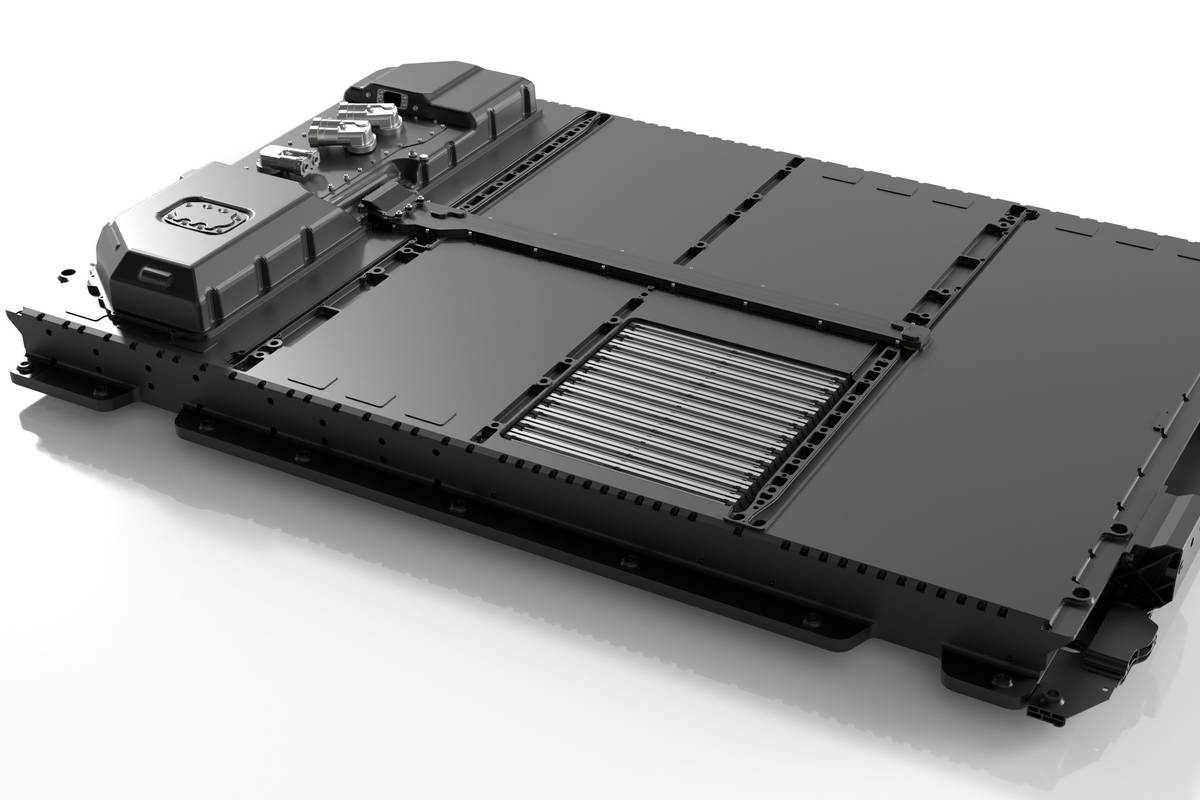
Every few months, another press release announces a solid-state battery breakthrough. The headlines are always dramatic, things like "Revolutionary Battery Could Charge in Minutes" or "New Battery Doubles EV Range," and they keep raising the same question: should you hold off on buying an EV because solid-state batteries are just around the corner? That question deserves a real answer, not a brush-off and not more hype.
Solid-state batteries are important. The gains they promise over today's lithium-ion batteries are real and large. But the road from a lab demo to millions of cars rolling off assembly lines is also real and long, and it keeps turning out to be longer than the headlines suggest.
How Solid-State Batteries Work
Today's lithium-ion batteries use a liquid electrolyte, a lithium salt dissolved in an organic solvent, to carry lithium ions between the anode (negative side) and cathode (positive side) as the battery charges and discharges. That liquid has served the industry well since the 1990s and made the EV boom possible, but it has drawbacks. It's flammable, which is part of why battery fires can be so intense. It breaks down over time and with temperature swings. It limits how tightly cells can be packed. And it restricts which materials can be used for the anode.
Solid-state batteries swap that liquid for a solid material that can still move lithium ions, usually a ceramic oxide, a sulfide, or a polymer. It sounds like a small change, but it opens the door to improvements almost across the board while removing several of the liquid electrolyte's biggest weaknesses.
The solid electrolyte does two jobs at once: it separates the anode from the cathode and conducts ions between them, so cells can be built more compactly. Most importantly, solid electrolytes are far less flammable, which removes the main fuel for battery fires, and many of them can work with lithium metal anodes, which pack in much more energy.
Solid-State vs Lithium-Ion: The Key Differences
| Property | Current Lithium-Ion | Solid-State (Target) |
|---|---|---|
| Energy density | 250–300 Wh/kg | 400–500 Wh/kg |
| Charge rate | 1–3C typical | 3–6C potential |
| Cycle life | 1,000–2,000 cycles | 5,000+ cycles (target) |
| Fire risk | Moderate (flammable electrolyte) | Much lower |
| Temperature performance | Degrades below 20°F | Better cold performance (design dependent) |
| Manufacturing readiness | Fully scaled | Pilot scale, first mass production targeted around 2027 |
| Cost (current) | Roughly $100–$120 per kWh (pack average) | Several times higher at pilot scale |
The Real Advantages: What Solid-State Delivers
Energy density is the headline benefit. Solid-state cells are expected to reach 400 to 500 Wh/kg, compared with 250 to 300 for today's lithium-ion cells. Most of that comes from lithium metal anodes, which hold far more lithium per kilogram than the graphite anodes in current cells. In practice, a battery pack the same size could store 50 to 70% more energy. A 300-mile EV could, in theory, go 450 to 500 miles with a solid-state pack of the same size. Or an automaker could keep 300 miles of range with a pack that's 35 to 40% smaller and lighter, making the car more efficient and freeing up space.
Faster charging is the second big benefit. Solid electrolytes can, in principle, handle very high charging rates, potentially 3 to 6C, meaning a full charge in 10 to 20 minutes instead of the 20 to 40 minutes the best cars manage today. That depends on the specific chemistry and cooling design, but the ceiling is much higher than with liquid electrolytes. Reaching 80% in under 10 minutes would make charging time a non-issue on road trips.
Safety is the third. EV battery fires are rare, and by most measures EVs catch fire less often than gas cars, but they're intense when they happen because the liquid electrolyte feeds the reaction. Solid electrolytes are far harder to ignite, which should sharply cut both the chance and the severity of a fire.
Longevity is the fourth. Solid-state cells are expected to keep their capacity for more charge cycles than today's cells, possibly outlasting the car itself without significant wear. That matters for long-term ownership costs and for the growing question of what happens to EV batteries when cars reach the end of their lives.
The Real Challenges: Why It's Not Here Yet
If solid-state batteries are so much better, why isn't every EV using them already? Because getting from a lab demo to mass production for cars involves engineering problems that have eaten up decades of research and billions of dollars without a fully commercial solution yet.
The biggest technical problem is the interface where the solid electrolyte meets the electrodes. At a microscopic level, that contact isn't perfectly even. As the battery charges and discharges, the electrode materials swell and shrink slightly. A liquid electrolyte simply flows to fill the gaps. A solid one can't, so tiny gaps open up, resistance grows with each cycle, and performance falls off. A related and serious problem is dendrites, thin filaments of lithium metal that can grow through the solid electrolyte and short out the cell.
Manufacturing is the second big hurdle. Making lithium-ion batteries is expensive, but the processes are well established and scale up predictably. Solid-state cells need new processes. Sulfide electrolytes in particular react with moisture and need extremely dry production environments, at a scale that doesn't exist commercially yet. At pilot scale, solid-state cells cost several times more per kWh than today's lithium-ion cells. Bringing that cost down takes enormous factories, and companies are reluctant to build those until demand is proven.
Temperature is another ongoing issue. Some solid electrolytes, especially polymers, work well at room temperature or above but lose a lot of conductivity in the cold, the opposite of what drivers in cold climates need.
Who Is Closest to Production
Several companies are close to making solid-state batteries commercially, not just in the lab. Meanwhile, "semi-solid-state" batteries, which use a small amount of liquid or gel electrolyte, have already appeared in some Chinese EVs, including packs offered by NIO. They're a stepping stone, not the finished product. Here's where the main players stand on true solid-state cells:
Toyota: The Most Publicly Committed at Scale
Toyota has made the boldest public promises of any major automaker. In 2023, it said it aimed to start producing vehicles with solid-state batteries around 2027 to 2028, and it has committed billions to battery development, including a partnership with Japanese energy company Idemitsu Kosan to produce sulfide solid electrolyte at scale. Toyota says it has made major progress on the durability problems that have held back sulfide cells, though those claims come from its own testing, not independent verification.
Toyota has talked about a first-generation solid-state battery with around 1,000 km (about 620 miles) of range and a later high-performance version targeting around 1,200 km (about 745 miles). Those are targets, not proven results in production cars. As of 2026, Toyota still points to limited initial production late this decade, most likely in premium models, with wider use across Toyota and Lexus in the early 2030s. Toyota's manufacturing know-how and supplier network make its timeline more believable than most.
Samsung SDI and Panasonic
Samsung SDI, a major battery supplier to automakers like BMW and Stellantis, plans to start mass production of sulfide-based all-solid-state batteries in 2027 at its plant in Ulsan, South Korea. It is targeting energy density above 900 Wh/L, about 40% higher than its current prismatic cells, using an "anode-less" design, and it has already sent sample cells to potential customers for testing.
Panasonic, a longtime battery supplier to Tesla, has been more cautious about solid-state, in line with Tesla's view that improving today's large cylindrical cells, like the 4680, will pay off sooner and more cheaply. Panasonic is researching solid-state technology but hasn't announced a production timeline for EV-size cells.
Solid Power and QuantumScape
QuantumScape, a Silicon Valley company backed by Volkswagen, uses a ceramic oxide electrolyte and an anode-free lithium metal design. In 2024, Volkswagen's battery company PowerCo reported that QuantumScape's prototype cells completed more than 1,000 charge cycles, roughly equivalent to several hundred thousand miles, while keeping most of their capacity. That was a major milestone. QuantumScape has since been scaling up its manufacturing process and licensing its technology to PowerCo for eventual large-scale production. Commercial cars using its cells are expected later this decade at the earliest, depending on how scale-up goes.
Solid Power, whose partners include BMW and Ford, makes sulfide-based solid electrolyte and has supplied cells to automakers for testing. BMW has put Solid Power cells into a test car to gather real-world data. Solid Power's approach is designed to work with existing lithium-ion production equipment, which could make scaling up easier. The company has increasingly focused on supplying electrolyte material to cell makers, with commercial car applications expected around the end of the decade.
Realistic Consumer Timeline
Based on where these programs stand, here's our best estimate of when solid-state batteries will matter to ordinary car buyers:
2027 to 2028: The first small-scale production, mostly in premium and luxury models or special editions. Very expensive, very limited, aimed at early adopters or used to show off the technology.
2029 to 2031: Wider availability in premium cars, and the first appearances in top trims of mainstream models. Prices still well above comparable lithium-ion cars, but the range and charging benefits start showing up in real-world reviews.
2032 to 2035: Higher-volume production brings costs down meaningfully. Solid-state batteries start appearing in mid-priced cars, while lithium-ion stays dominant in cheaper models. This is when solid-state starts to affect the typical buyer's decision.
After 2035: Solid-state reaches price parity with lithium-ion in mainstream cars and becomes the main technology in new EVs. Lithium-ion EVs will still fill used car lots for decades.
Should You Wait Before Buying an EV?
People ask this all the time, so here's a direct answer: no, don't wait for solid-state batteries if you want an EV now. An EV bought in 2026 doesn't need solid-state technology to make sense. Today's lithium-ion EVs offer 280 to 350 miles of range, fast charging in 20 to 30 minutes, and ownership costs that can compete with gas cars, especially if you charge at home.
Waiting for solid-state assumes two things: that you'll be able to buy one at a reasonable price soon enough to make waiting worthwhile, and that its improvements will actually matter for how you drive. For most buyers, the first assumption is wrong. Affordable, mainstream solid-state EVs are unlikely before the early to mid 2030s. The second only holds if you really need what solid-state offers, much longer range or much faster charging, instead of being happy with what today's EVs can do.
If an EV available now meets your needs, and for most drivers one does, buying now and maybe moving to solid-state in eight to ten years is a perfectly sensible plan. You get years of lower running costs, less maintenance, and lower emissions while the technology matures and gets cheaper.
What Solid-State Means for the Broader EV Industry
When solid-state batteries do arrive at scale, the effects will go well beyond individual cars. A roughly 50% jump in energy density would let automakers either greatly extend range without making packs heavier or pricier, or keep today's range with much smaller, lighter, cheaper packs. Lighter batteries make cars more efficient, which stretches range further, and they improve handling too, since today's heavy packs weigh on how cars drive.
Faster charging, especially 80% in under 10 minutes, would change what public charging networks need to look like. If road trip stops take 10 minutes, there's less pressure to cram huge numbers of chargers along every highway, and most of the remaining worry about EV road trips goes away. The business model for fast charging also changes when a session fits into a normal coffee break.
The safety improvement matters most for public perception. EV fires get far more media coverage than their actual frequency justifies, and removing the flammable electrolyte would take away one of the most persistent, if statistically small, concerns about EVs, including for insurers and fleet operators.
The bottom line for EV shoppers
Solid-state batteries will be a big deal once they're made at scale. They're unlikely to reach affordable, mainstream cars before the early 2030s, and mid-2030s is more realistic. If you're waiting for solid-state today, you could be waiting eight to twelve years, while paying for gas, spending more on maintenance, and missing out on how good current EVs already are. Buy the right EV for your needs now, and upgrade when the technology has matured.
The Three Main Solid Electrolyte Chemistries Compared
Not all solid-state batteries use the same kind of electrolyte, and the choice has a big effect on performance, safety, and how easy the cells are to manufacture. Knowing the main options helps explain why different companies are betting on different approaches, and what that means for when and how these batteries reach cars.
Oxide electrolytes, including lithium garnet (LLZO) and LiPON, are very chemically stable and can handle a wide temperature range. They're non-flammable and work with lithium metal anodes. The downside is that oxides are brittle and hard to make into thin, dense layers without special manufacturing. Many also conduct ions less well at room temperature than liquids or sulfides, which can mean thicker layers and lower energy density. QuantumScape's ceramic separator is the best-known oxide-based program aimed at cars.
Sulfide electrolytes, such as argyrodite (Li₆PS₅Cl) and LGPS (lithium germanium phosphorus sulfide), conduct ions about as well as liquid electrolytes, sometimes better. That's the main reason several leading programs, including Toyota, Samsung SDI, and Solid Power, have focused on them. The catch is that sulfides react with moisture and can release toxic hydrogen sulfide gas, so they must be made in tightly controlled, ultra-dry environments, which adds cost and complexity at scale. Still, the conductivity advantage is big enough that many carmakers see sulfides' manufacturing challenges as easier to solve than oxides' basic performance limits.
Polymer electrolytes, often based on PEO (polyethylene oxide), are the easiest to fit into existing battery production and are flexible instead of brittle. Their big limitation is that they only conduct ions well when warm, typically around 60°C or higher, which doesn't suit a car battery that has to work from freezing winter mornings to hot summer days. Bolloré's Bluecar, used in car-sharing fleets like Paris's Autolib', ran on a heated lithium metal polymer battery, which worked for slow city driving where keeping the battery warm was manageable. For mainstream cars that need strong performance at everyday temperatures from -30°C to 50°C, pure polymer electrolytes aren't practical yet.
The Manufacturing Scale Challenge in Detail
The gap between lab and factory becomes clearer when you look at what making these cells actually involves. For sulfide cells, that includes ultra-dry production rooms, stricter even than today's lithium-ion lines, with dew points below -50°C. It includes precise methods for laying down very thin electrolyte layers. And it includes assembly that applies enough pressure to keep every layer in contact as the cell cycles, without cracking the fragile electrolyte.
Each of those steps adds cost, yield problems, and equipment that today's lithium-ion factories don't have. Building a solid-state battery factory from scratch is estimated to cost significantly more than a lithium-ion factory of the same capacity, an investment no company makes without confidence in future demand. It's a chicken-and-egg problem: you need scale to cut costs, but you need low costs to create demand for scale. The industry is trying to break that loop through government support, partnerships between automakers and battery makers, and early launches in expensive premium cars.
Specific Implications for EV Buyers Making Decisions Now
So solid-state batteries are real, important, and coming, eventually. What should you actually do with that if you're thinking about buying an EV in 2026?
Think about how long you'll keep the car. If you plan to own an EV for three to five years, solid-state batteries are basically irrelevant to your decision. No affordable, mainstream solid-state EV will be available in that window, and you'll probably have sold your car before they arrive in volume. If you plan to keep it for ten years, things change a little. Solid-state cars might be common by the time you sell, which could affect your resale value. But even then, you'd spend the first seven or eight years driving today's EV and collecting the fuel and maintenance savings that waiting wouldn't give you.
There's one case where waiting could make sense: you already have a car that works fine, you'd mainly be buying an EV to save on fuel, and you really want cutting-edge technology. For you, putting off an EV purchase for two or three years means giving up two or three years of fuel savings, maybe $1,500 to $3,000, in exchange for a shot at a newer, better car later. That's a real trade-off with a real cost, but it's not unreasonable if those are your priorities.
For everyone else, buy the EV that suits your needs today. The technology will keep improving, as it always does. Every buyer who waited for the next big thing also spent those years paying for gas and missing out on what EVs already do well.