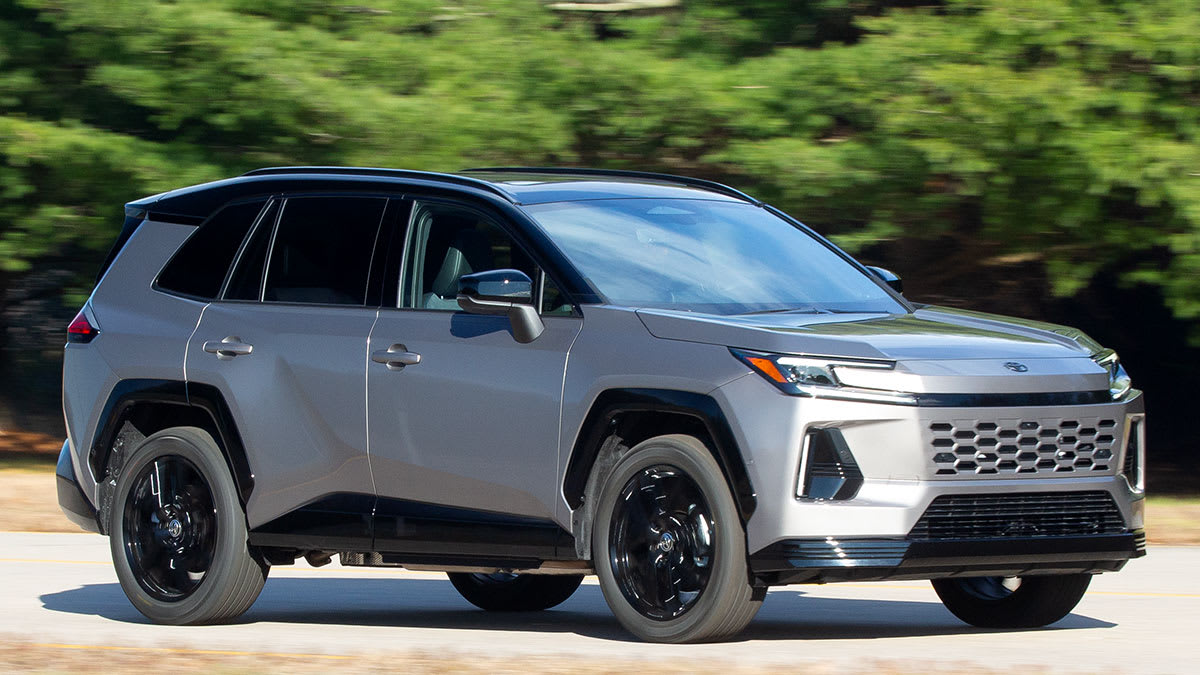
Toyota has been selling hybrids for more than 25 years, since the first Prius, and no rival has more real-world data on how hybrid systems hold up over time. The RAV4 Hybrid became the benchmark compact hybrid SUV on the strength of that experience: excellent fuel economy, top-tier reliability, and the best resale values in its class. For 2026, the RAV4 is all new, and every version is now a hybrid. There's a regular hybrid and a plug-in hybrid, with no gas-only model anymore. It still isn't the flashiest SUV in its class, and some rivals feel plusher inside at similar prices. But if you care most about reliability, resale value, and years of trouble-free ownership, the RAV4 Hybrid is still the one to beat.
| Specification | 2026 RAV4 Hybrid |
|---|---|
| Starting price | About $31,900 (LE FWD); XLE Premium about $37,550 |
| Combined system power | 226 hp (FWD) / 236 hp (AWD) |
| EPA fuel economy (XLE Premium AWD) | 45 mpg city / 38 mpg highway / 41 mpg combined |
| Screens | 12.3-in digital cluster; 10.5-in or 12.9-in touchscreen |
| Drivetrain options | FWD, or AWD with a separate rear electric motor |
| Plug-in version | RAV4 Plug-in Hybrid, 324 hp, standard AWD |
| Towing capacity | 1,750 lb (LE); up to 3,500 lb on higher trims |
| Battery type | Lithium-ion |
| AWD system | Dual motor, electronically controlled rear axle |
| Warranty | 3yr/36k bumper-to-bumper, 5yr/60k powertrain, 10yr/150k hybrid battery |
Prices are approximate MSRPs before destination and vary by trim and options. Check Toyota's current pricing before you buy.
MenThemDrive Score
4.6 / 5.0 MenThemDrive Rating
Powertrain: Smooth, Efficient, and Enduring
The 2026 RAV4 Hybrid pairs a 2.5-liter four-cylinder engine with electric motors and a lithium-ion battery, producing 226 horsepower with front-wheel drive or 236 horsepower with all-wheel drive. AWD models add a separate electric motor on the rear axle, with no driveshaft connecting it to the front. That's a little more power than the previous generation, and it's more than enough for everyday driving. It won't thrill you on a highway on-ramp, but it doesn't feel short of breath either.
The switch to a lithium-ion battery is one of the biggest changes. Toyota used nickel-metal hydride (NiMH) batteries in RAV4 hybrids for years, and they built an outstanding reliability record. Lithium-ion is lighter and packs in more energy, which helps efficiency and responsiveness. Toyota also has plenty of experience with lithium-ion in its other hybrids, and it still backs the hybrid battery with a 10-year, 150,000-mile warranty. Older RAV4 and Camry hybrids in taxi and rideshare fleets have regularly gone well past 200,000 miles on their original batteries, which says a lot about how Toyota engineers its hybrid systems.
If there's a weak spot, it's character. The engine can still get noisy when you floor it, and the RAV4 doesn't feel as punchy in the midrange as the turbocharged Hyundai Tucson Hybrid or as smooth and EV-like as Honda's CR-V Hybrid. It's a very good powertrain, just not the most exciting one in the class.
Real-World MPG: What 40+ Means Day-to-Day
The EPA rates the 2026 RAV4 Hybrid XLE Premium AWD at 45 mpg city, 38 highway, and 41 combined, and some front-wheel-drive versions do a little better. As with most hybrids, it's more efficient in town than on the highway, because stop-and-go driving lets regenerative braking recapture more energy. Toyota hybrids have a long history of coming close to their EPA numbers in real driving, and owner-reported fuel economy for recent RAV4 hybrids has generally landed near the official figures.
At 15,000 miles a year and $3.50 a gallon, 41 mpg works out to about $1,280 a year in fuel. A typical gas-only compact SUV at 28 mpg would burn about $1,875. That's roughly $600 a year saved, or around $3,000 over five years. With no gas-only RAV4 for 2026, you don't have to decide whether the hybrid premium pays off. Every RAV4 comes with the good fuel economy built in, and the RAV4 Hybrid's starting price is only modestly higher than the old gas model's.
AWD System: Why Toyota's Approach Is Different
The RAV4 Hybrid's AWD uses a rear electric motor as a completely separate source of drive, instead of a mechanical link from the front axle. It can send torque to the rear wheels almost instantly, and the system constantly adjusts how much it uses based on wheel slip, how hard you're accelerating, your speed, and road conditions. It can step in before the wheels spin, instead of waiting to react after they do.
Owners have long praised Toyota's electric AWD for how confident it feels on snow and ice. Instant response from the rear motor, combined with the smooth, lurch-free delivery of electric power, gives traction that many drivers find better than traditional mechanical AWD in slippery conditions. The battery sits low between the axles, which also helps stability in all conditions.
Interior: The Trade-Off Every Honest Review Mentions
The redesigned RAV4's cabin is a clear step up from the old model, with a cleaner dashboard, bigger screens, and more storage. Even so, rivals like the Hyundai Tucson can feel a bit more upscale at similar prices, while Toyota leans toward a practical, rugged look over plush materials. That will suit some buyers better than others, so sit in both before you decide.
Rear seat room is good for the class and fits most adults comfortably on longer trips, though the Honda CR-V still stands out as especially roomy in back. Cargo space is competitive with the best compact SUVs and plenty for family use.
Where Toyota interiors really earn their keep is durability. On high-mileage RAV4s, the materials and fit and finish tend to hold up very well, a pattern long reported by owners and used car dealers alike. Toyota picks materials that age well, not just ones that impress in the showroom. You won't notice that on a 20-minute test drive, but you will after years of ownership.
Technology: Improved but Not Category-Leading
The 2026 RAV4 is one of the first Toyotas built on the company's new in-house software platform, which brings a faster, more modern infotainment system and over-the-air updates. Every version gets a 12.3-inch digital instrument cluster, plus either a 10.5-inch or 12.9-inch center touchscreen, and wireless Apple CarPlay and Android Auto. It's a big improvement over the laggy systems in older Toyotas.
Toyota's latest Safety Sense suite comes standard. It includes a pre-collision system with pedestrian and cyclist detection, adaptive cruise control with lane centering, automatic high beams, and proactive driving assist, which gently brakes as you approach curves or slower traffic to reduce how often you have to adjust your speed. On long highway drives, that makes a noticeable difference to fatigue.
So is it class-leading? Not quite. Hyundai still offers a slicker screen setup at some price points. But Toyota has closed most of the gap, and for most buyers the RAV4's tech will feel modern and easy to use.
Which Trim Makes Sense
For most buyers, the XLE Premium hits the sweet spot. At around $37,550 before destination, it adds comfort and convenience features like synthetic leather seats, heated front seats, a wireless phone charger, and an available power liftgate over the base models. These are features you'll use every day, not showroom extras you'll forget about in a month. Add AWD if you live somewhere with snow or regularly drive on slippery roads.
The LE, starting around $31,900, is the value pick. It has the same efficient hybrid system and core safety tech, but it's more basic inside and limited to a 1,750-lb towing capacity. If you need to tow more, higher trims can handle up to 3,500 pounds. The rugged-looking Woodland and the top-of-the-line Limited add more style, features, and comfort for more money. If you value the RAV4 mainly for its reliability and efficiency, the XLE Premium gives you everything important without overspending.
Hybrid vs Plug-in Hybrid RAV4: The Analysis
For 2026, the choice is no longer hybrid versus gas. It's hybrid versus plug-in hybrid. The RAV4 Plug-in Hybrid has a much larger battery, standard all-wheel drive, 324 horsepower, and 3,500-lb towing, plus enough electric-only range to cover many people's daily commutes without using any gas.
The plug-in is the better choice if you can charge at home, most of your trips are short, and you want the quickest RAV4. Many owners will barely buy gas during the week. The regular hybrid makes more sense if you can't charge at home, you drive long distances often, or you want to spend less. It costs noticeably less to buy, and without regular charging, the plug-in's extra battery weight eats into its advantage. For most families, the regular hybrid is the simpler, better-value choice. For home chargers with short commutes, the plug-in is well worth a look.
Final Verdict
The 2026 Toyota RAV4 Hybrid earns our top rating among compact hybrid SUVs. Not because it's the most high-tech or loaded with features, but because it nails what matters most for long-term ownership: excellent real-world fuel economy, Toyota's unmatched hybrid track record, and resale values that reflect steady demand. The all-new generation fixes the old model's biggest weakness, its dated tech, and adds more power and towing capacity. If you plan to keep your SUV for 7 to 10 years and want the most confidence you'll have a smooth ownership experience, the RAV4 Hybrid is the right choice. If you care more about a plusher interior, flashier tech, or the longest warranty, the Hyundai Tucson Hybrid may suit you better. Neither is wrong. It comes down to what you value most.
The bottom line on trim and options
Buy the XLE Premium, with AWD if you need it. It adds the comfort and convenience features you'll use every day at a sensible price. Step up to a higher trim only if you want the extra towing capacity, more upscale materials, or specific features you know you'll use. Don't over-configure it, because the RAV4 Hybrid's core strengths don't get much better as you add options.
Cold Weather Performance
All hybrids lose some efficiency in cold weather. The engine runs more to warm itself and the cabin, and batteries work less efficiently when cold. Expect the RAV4 Hybrid's fuel economy to drop somewhat in real winter conditions, often into the mid-to-high 30s instead of the low 40s. Unlike a full EV, though, a hybrid never leaves you worrying about range in the cold, because the gas engine is always there.
The rear electric motor is a real plus in winter. It sends torque to the rear wheels instantly from a stop, without waiting for a mechanical AWD system to engage. On icy starts from a stoplight, that quick response makes a noticeable difference. You'll barely notice it in mild conditions, but it matters most in the worst winter weather.
Long-Term Ownership Experience: What 100,000-Mile Owners Report
The 2026 RAV4 is a new generation, so there's no high-mileage data on this exact model yet. But the previous-generation RAV4 Hybrid, sold from the 2019 model year, gives a very good idea of what to expect from Toyota's hybrid engineering. Owner forums, reliability surveys, and independent data have consistently painted a positive picture.
Owners of earlier RAV4 Hybrids at 80,000 to 120,000 miles commonly report little loss in battery performance, with fuel economy still near what it was when new. The rear electric motor rarely needs attention, and regular maintenance items like brakes, tires, cabin filters, and oil changes make up most of the running costs. Less common issues have included occasional inverter or electrical problems on some high-mileage vehicles. Toyota also has one of the largest dealer networks in the US, so help is rarely far away if something does go wrong.
That depth of experience is a big part of Toyota's appeal. Honda's hybrid system has a good record too, and Hyundai's hybrids have held up well in their first few years, but neither has as long a track record in compact SUVs as Toyota. With any brand-new generation, it's reasonable to expect a few early bugs, so check for recalls and software updates. Still, Toyota's long history with hybrids is an advantage that newer competitors can only earn with time.
Notable Packages Worth Knowing
The RAV4 Hybrid's options are fairly simple, but a few are worth knowing about. Cold-weather features like a heated steering wheel are well worth having if you live somewhere with real winters. Roof rails and crossbar options make it easy to carry bikes, kayaks, or skis without buying an aftermarket rack. A tow hitch and wiring are available if you plan to use the RAV4's towing capacity, which is 1,750 pounds on the LE and up to 3,500 pounds on higher trims, enough for a small boat, utility trailer, or light camper.
Toyota's connected services, which include automatic crash notification, stolen vehicle help, and remote features through the app, come with a free trial on new vehicles and then need a paid subscription. Decide before the trial ends whether it's worth it to you. Stolen vehicle tracking is the most useful piece, especially if you live in an area with a lot of car theft.
Head-to-Head vs Key Rivals
Against the Honda CR-V Hybrid: the RAV4 Hybrid wins on Toyota's longer hybrid track record, higher towing capacity on upper trims, and a plug-in option. The CR-V Hybrid wins on rear seat room and a smooth, EV-like driving feel. Fuel economy is close. If you regularly carry tall adults in the back, the CR-V Hybrid is the better pick. If you want Toyota's reliability reputation, stronger towing, or the option of a plug-in, go with the RAV4.
Against the Hyundai Tucson Hybrid: the RAV4 Hybrid wins on long-term reliability history and resale value. The Tucson wins on interior feel and a longer powertrain warranty, 10 years or 100,000 miles. The choice mostly comes down to how much weight you give Toyota's track record versus Hyundai's warranty and cabin. If you'll keep the car five to seven years, the Tucson Hybrid is a strong choice. For eight to twelve years, Toyota's history is a real advantage.
Against the Kia Sportage Hybrid: the RAV4 Hybrid wins on reliability track record and resale value. The Sportage wins on purchase price, cargo room, and warranty. If you're on a tight budget and want a capable hybrid SUV, the Sportage Hybrid is one of the best values in the class, and its lower starting price is something the RAV4 can't match.