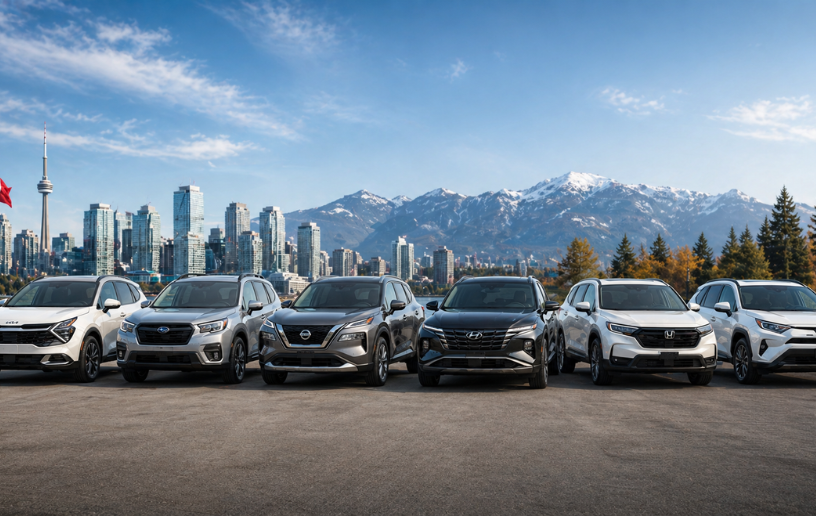
In 2026, compact SUVs around $35,000 may be the most fiercely contested class in the whole car market. Seven major brands are chasing the same buyers, new versions arrive faster than ever, and the tech, safety, and efficiency you get at this price would have counted as luxury-car features five years ago. With this budget, the hard part isn't finding a good SUV. It's figuring out which of several excellent ones fits you best.
Our rankings draw on owner reliability data from sources like Consumer Reports and RepairPal, insurance cost comparisons for a typical driver, and EPA fuel economy ratings backed up by owner-reported numbers. The aim is to lay out the trade-offs clearly, not to crown one SUV as best for everyone.
What Matters in This Segment
Four things account for most of the real differences between these SUVs. The first is reliability and long-term costs, because buyers in this class often keep their SUVs 7 to 10 years, and the gap between a Toyota-level reliability record and a patchier one adds up over that time. The second is fuel economy. Over 7 to 10 years at 15,000 miles a year, fuel can cost $8,000 to $15,000, which deserves more weight than most people give it. The third is safety. These are family vehicles, and the bar in 2026 is high enough that falling short of an IIHS Top Safety Pick award is a real drawback. The fourth is cargo and cabin practicality, since most buyers use these SUVs mainly to haul family and gear, not to carve up back roads.
1. Honda CR-V Hybrid: Best Overall (~$35,600 Sport Hybrid)
The Honda CR-V Hybrid takes the top spot because it combines things no rival quite matches all at once: a reliability record right up there with Toyota's, excellent fuel economy for a regular hybrid (around 37 to 40 mpg in real-world driving), one of the most practical cargo areas in the class (about 36 cubic feet behind the rear seat and about 76 cubic feet with it folded), and Honda Sensing safety tech standard on every trim. The Sport Hybrid starts just over $35,000. If you need to stay strictly under budget, the gas-powered CR-V starts in the low $30,000s.
Honda's two-motor hybrid system gives the CR-V a different feel from most SUVs. The engine mostly works as a generator, while the electric motor does most of the driving. The result is quieter and smoother than a typical gas SUV, with none of the "rubber band" feel of some CVT-equipped rivals. Its 204 combined horsepower is enough without being exciting. This is a practical family SUV, not a performance machine.
Cargo space is one of the CR-V's big strengths. The load floor is wide and flat, the opening is large, and there's lots of room with the rear seats folded. One trade-off: hybrid CR-Vs lose the under-floor storage and spare tire that gas versions have, because the battery sits there. The rear seats recline and the back doors open wide, which makes loading car seats and kids much easier.
The one fair criticism is the infotainment. It's better for 2026, with a 9-inch touchscreen and wireless Apple CarPlay and Android Auto now standard, but it still isn't as slick as Hyundai's or Kia's systems. If you spend a lot of time using the screen, the Tucson or Sportage feel more modern.
2. Toyota RAV4 Hybrid: Strongest Resale and Reliability (~$31,900 and up)
The Toyota RAV4 Hybrid is consistently America's best-selling hybrid SUV. With its fuel economy around 40 mpg, Toyota's excellent reliability record, and the best resale value in the class, it makes a very strong case even when it doesn't top every line of a comparison chart. For 2026 the RAV4 is all new, every version is a hybrid, and the base LE starts around $31,900.
The new hybrid powertrain makes 226 horsepower with front-wheel drive or 236 with all-wheel drive, more than before, and uses a lithium-ion battery. AWD versions use a separate electric motor to drive the rear wheels, with no traditional driveshaft, so power reaches the back wheels quickly and smoothly. It's a simpler system than many rivals' mechanical AWD setups.
Toyota's latest safety suite comes standard. Automatic emergency braking detects pedestrians and cyclists, lane centering actively keeps you in your lane instead of just warning you, and proactive driving assist gently brakes as you approach curves or slower traffic. It's sophisticated technology that makes highway driving noticeably more relaxed. The redesign also brings bigger screens, a 10.5-inch or 12.9-inch touchscreen plus a 12.3-inch digital instrument panel, and newer software, which fixes the old RAV4's biggest weakness.
Where it falls short: higher trims climb well past $35,000, and the RAV4 still doesn't feel quite as plush inside as the Tucson at similar prices. As an all-new generation, it also doesn't have a long track record of its own yet, though it builds on Toyota's decades of hybrid experience.
3. Hyundai Tucson Hybrid: Best Technology and Features (~$33,400 and up)
The Hyundai Tucson Hybrid earns third place with class-leading tech, a plug-in hybrid option with about 33 miles of electric range, and a cabin that often impresses reviewers who compare it with SUVs costing $5,000 to $8,000 more. Its 226-horsepower hybrid system is among the strongest here, and real-world fuel economy in the high 30s keeps it competitive with the CR-V and RAV4.
The Tucson leads the class in a few tech areas. Hyundai's Bluelink connected services let you start the car, set the cabin temperature, and check its status from your phone. Many trims include Hyundai's Digital Key, which turns your phone into a key. And the refreshed dashboard has a large, wide-screen display that's among the best in the segment. Upper trims add extras like ventilated seats that you'd normally find on much pricier vehicles.
Hyundai's 5-year, 60,000-mile basic warranty and 10-year, 100,000-mile powertrain warranty are the most generous in the class, much better than Toyota's and Honda's 3-year, 36,000-mile basic coverage. The long powertrain coverage applies to the original owner. Used buyers get shorter coverage. If you plan to buy new and keep it a long time, that warranty is worth real money.
The caveat is that Hyundai's reliability record past 100,000 miles isn't as well established as Toyota's or Honda's, mostly because the brand has a shorter history of high-mileage cars in the US. Recent Tucsons have scored well in reliability surveys, which is encouraging, but that data doesn't yet run as deep as Toyota's.
4. Mazda CX-50: Best Driving Experience (~$30,000 and up)
The Mazda CX-50 isn't the most practical or efficient SUV here, but it's clearly the most fun to drive. If you spend a lot of time behind the wheel and enjoy driving, that counts for something. Mazda puts driver feel and steering precision first in ways Toyota and Honda don't, and the CX-50 turns in crisply and gives you more feedback through the steering wheel than anything else at this price.
The base 2.5-liter engine makes 187 horsepower and is fine for everyday driving, but it lacks character. The 2.5 Turbo, available on upper trims, makes up to 256 horsepower on premium fuel and uses a proper 6-speed automatic instead of a droning CVT, which gives it a much more engaging feel. There's also a CX-50 Hybrid, which uses a Toyota-sourced hybrid system and gets fuel economy in the high 30s, a big improvement over the gas versions.
The trade-off with the gas CX-50 is fuel economy. Non-hybrid versions typically get around 25 to 29 mpg combined, far below the hybrid rivals. Over seven years at 15,000 miles a year and $3.50 a gallon, that can cost $3,500 to $4,500 more in fuel than a 40 mpg hybrid. If efficiency matters but you love how Mazdas drive, the CX-50 Hybrid is worth a close look, though it gives up some of the sporty character of the Turbo.
5. Kia Sportage Hybrid: Best Value Proposition (~$30,000 and up)
The Kia Sportage Hybrid typically costs a little less than its close relative, the Hyundai Tucson Hybrid, while sharing much of the same hardware: a 1.6-liter turbo four-cylinder with an electric motor, about 227 horsepower, and fuel economy in the high 30s. Add Kia's improving reliability record and its own 5-year, 60,000-mile basic and 10-year, 100,000-mile powertrain warranty for original owners, and the Sportage Hybrid is one of the best values among hybrid compact SUVs.
Its cabin is distinctive and well designed, with an available curved panoramic display that combines the instrument cluster and touchscreen into one sweeping panel. Kia's standard Drive Wise safety suite is thorough and well tuned. And at about 39.6 cubic feet behind the rear seats, the Sportage has more cargo space than the CR-V, RAV4, or Tucson.
Where it falls short: it's not quite as refined on the road as the CR-V or RAV4, with a bit more highway noise and slightly less precise steering, and Kia's resale values, while improving, still trail Toyota and Honda. If you plan to sell within three to five years, that lower resale value eats into the lower price. If you'll keep it eight to ten years, the value case gets stronger over time.
6. Subaru Forester: Best for All-Weather Capability (~$30,700 and up)
The Subaru Forester fills a specific niche: buyers who regularly drive in snow, heavy rain, mud, or on dirt roads, and who want standard all-wheel drive on every trim. Subaru's Symmetrical AWD is one of the most capable systems in the class. The gas Forester gets around 29 mpg combined, while the newer Forester Hybrid raises that to about 35 mpg, closing much of the gap with Toyota and Honda.
The Forester also has the best visibility of the group. Its tall windows, thin pillars, and upright shape give you clearer sightlines than any rival. That's a real help for new or nervous drivers, for parallel parking in the city, and on twisty mountain roads where you want to see the edges of the road. Subaru's EyeSight driver assistance has long earned strong marks in IIHS crash avoidance testing.
The Hybrid vs Gasoline Decision in 2026
Among compact SUVs, hybrid versions typically cost $2,000 to $4,000 more than comparable gas versions, where a gas version still exists. For 2026, the RAV4 is hybrid only. Here's the math. At 15,000 miles a year, a 40 mpg hybrid against a 28 mpg gas model at $3.50 a gallon saves about $590 a year. With a $3,000 hybrid premium, you break even in about five years. Over ten years, you come out roughly $2,900 ahead on fuel after paying back the premium.
Hybrids in this class also tend to hold their value better than gas versions, because used hybrids are in high demand, often adding $1,000 to $2,500 to resale value. That strengthens the financial case further. If you'll keep your SUV 7 to 10 years, the hybrid premium clearly pays off, and you also get lower emissions and fewer trips to the gas station.
The honest recommendation for most buyers
If you drive less than 12,000 miles a year and expect to sell within four years, a gas CX-50 or a base Sportage offers the best value. If you drive 12,000 miles a year or more and plan to keep the SUV six years or longer, the CR-V Hybrid or RAV4 Hybrid will likely save you more through lower fuel costs and higher resale value, despite the higher price. Most buyers belong in that second group, because people usually keep their cars longer than they expect to.
Insurance Costs: The Hidden Variable
Insurance for compact SUVs can vary by roughly 15 to 25% between the cheapest and priciest vehicles in this comparison, for a 35-year-old driver with a clean record and standard coverage in a moderately priced state. The CR-V Hybrid usually lands near the low end, thanks to Honda's large repair network, reasonable parts prices, and strong safety ratings. The Mazda CX-50, especially in Turbo form, tends to cost a bit more to insure because of its sportier character and slightly pricier parts.
Over five years, a $200-a-year difference in insurance adds up to $1,000. That's meaningful, though smaller than the fuel cost gap between hybrid and non-hybrid models. Most buyers don't realize how much insurance varies between SUVs in the same class and price range. Get real quotes for each SUV on your shortlist before you decide. The differences will probably surprise you.
Cargo Space in Real-World Use
Cubic feet don't tell the whole story, because they ignore the shape of the cargo area, how easy it is to load, and how it's organized. The CR-V Hybrid has less space behind the rear seats than the Sportage or Tucson, but it's very usable: a flat floor at a convenient height, a wide opening, and a big, boxy area with the seats folded. The Forester's tall, upright cargo area and low load height make it the easiest to load with heavy or tall items. The CX-50's cargo area is a bit smaller, with a higher floor, because Mazda chose a sleeker roofline over maximum space.
For groceries, strollers, and sports bags, the CR-V, Tucson, and Sportage are all excellent, with well-shaped cargo areas and flat floors. For tall items like upright furniture, the Forester's boxier space is the most versatile. For bikes, kayaks, or skis carried on the roof, all of these work, and the RAV4 and Forester have especially well-integrated roof rail options.
The Practical Decision Guide
After all the comparisons, most buyers can decide based on a few key differences. If proven long-term reliability is non-negotiable and you'll keep the SUV 8 to 10 years, get the RAV4 Hybrid. If you want the most tech and features for your money and you're comfortable with Hyundai and Kia's improving but shorter reliability record, look at the Tucson Hybrid or Sportage Hybrid. If you enjoy driving and want practicality too, the CX-50 is the pick, in Hybrid form if fuel economy matters. If you live somewhere snowy and want standard AWD and great visibility, choose the Subaru Forester. And if you want the best mix of cargo versatility, rear seat room, and reliability in a hybrid, go with the CR-V Hybrid.
None of these is a wrong answer for the right buyer. The compact hybrid SUV market in 2026 is so competitive that whichever one you choose will likely serve you well. The real question is which strengths match your priorities.
Plug-In Hybrid Options in the Segment
Several SUVs here also come as plug-in hybrids: the Tucson Plug-in Hybrid (about 33 miles of electric range), the Sportage Plug-in Hybrid (about 34 miles), and the new RAV4 Plug-in Hybrid, which has a bigger battery than the old RAV4 Prime. All of them cost more than $35,000, so they're technically outside this list's budget, but they're worth a look if stretching your budget a bit could pay off.
If you drive 30 to 50 miles a day and can charge at home or work, a plug-in hybrid can handle most of those miles on electricity, at $0.10 to $0.16 per kWh instead of $3.50 gas. The fuel savings can cover the extra cost in several years, depending on how much you drive and what you pay for electricity. Keep in mind that the $7,500 federal clean vehicle tax credit, which used to help some plug-in hybrids, ended for vehicles bought after September 30, 2025. Some states and utilities still offer incentives, so check what's available where you live. Plug-in hybrids only pay off if you charge them regularly. Without regular charging, the regular hybrid is usually the better buy.