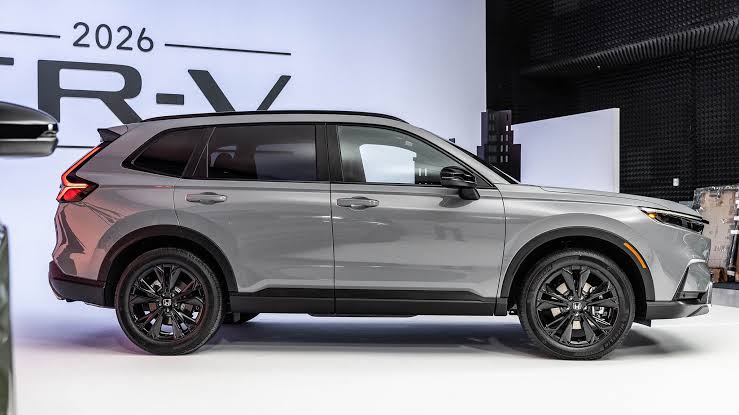
Honda sold more than 400,000 CR-Vs in the US in 2024, and nearly half were hybrids. Numbers like that don't come from brand loyalty or clever ads alone. They come from a car that fixes the right problems for the people who walk into Honda showrooms looking for a sensible family SUV. It has plenty of cargo space, great fuel economy, a strong reliability record, and tech that's easy to live with, and the CR-V Hybrid delivers all four without making you give anything up.
For 2026, Honda made useful updates without messing with a winning formula. Every CR-V now gets a 9-inch touchscreen, wireless Apple CarPlay and Android Auto, and a wireless charging pad. The TrailSport Hybrid adds a more outdoorsy option to the lineup. Beyond that, Honda left alone what already worked, which is usually the smart move when a car sells this well for good reasons.
This review covers every hybrid trim, what to know about the powertrain, and a straight comparison with the Toyota RAV4 Hybrid, which most shoppers in this class are weighing before they sign.
| Specification | 2026 CR-V Sport Hybrid FWD |
|---|---|
| Starting price (Sport Hybrid) | ~$35,600 |
| Powertrain | 2.0L Atkinson + 2 electric motors |
| Combined system power | 204 hp |
| EPA fuel economy (FWD) | 43 city / 36 highway / 40 combined |
| EPA fuel economy (AWD) | 40 city / 34 highway / 37 combined |
| 0 to 60 mph | About 8 seconds (independent testing) |
| Cargo (rear seats up) | About 36 cubic feet |
| Cargo (seats folded) | About 76 cubic feet |
| Rear legroom | About 41 inches |
| Towing capacity | 1,500 lb |
| Warranty | 3yr/36k bumper-to-bumper, 5yr/60k powertrain |
How the Hybrid System Works
Honda's hybrid system is a clever piece of engineering, and understanding it explains why the CR-V Hybrid drives so differently from a regular SUV, and even from rival hybrids.
Most of the time, the 2.0-liter four-cylinder engine doesn't drive the wheels directly. Instead it works as a generator, making electricity that either charges a small battery or powers the electric motor that drives the car. The engine only connects straight to the wheels in a narrow band of steady highway cruising, where that's the most efficient option. In town, in stop-and-go traffic, and at moderate highway speeds, you're essentially driving an electric car that makes its own electricity.
You feel the benefits right away. Pulling away from a stop is smooth and linear, and it feels stronger than an 8-second 0-to-60 time would suggest. The engine rarely sounds strained, because it's hardly ever trying to generate power and drive the wheels at the same time. Push hard, though, and the engine revs high and holds a drone that some owners find annoying. It's much less noticeable than on older Honda hybrids and mostly shows up when you're driving aggressively.
Regenerative braking recovers energy when you slow down and sends it back to the battery. Honda tuned it well, so everyday driving doesn't feel grabby, and if you like stronger regen that feels closer to one-pedal driving, you can turn it up with the steering wheel paddles.
Real-World Fuel Economy: What the Numbers Mean at the Pump
The EPA rates the front-wheel-drive 2026 CR-V Hybrid at 43 mpg city, 36 highway, and 40 combined. All-wheel-drive models get 40 city, 34 highway, and 37 combined. The TrailSport, with its heavier all-terrain tires, comes in a bit lower.
Owner reports and real-world testing suggest most drivers see about 36 to 40 mpg in mixed driving, and people who do mostly city driving tend to land at the top of that range.
Here's what that means for your wallet. At 15,000 miles a year and $3.50 a gallon, a front-wheel-drive CR-V Hybrid at 40 mpg uses about $1,313 of fuel a year. A turbocharged non-hybrid CR-V at about 30 mpg uses about $1,750. That's roughly $437 a year saved, or about $2,185 over five years. If you're choosing between hybrid and non-hybrid CR-Vs with similar features, the hybrid usually pays for itself within a normal ownership period, with no special driving habits needed.
A word on highway driving. The CR-V Hybrid's 36 mpg highway rating is well below its city number, because there's less stop-and-go driving for regenerative braking to recover energy from. If most of your driving is on the highway, expect the mid-30s, not 40. In mixed suburban and city driving, 40 mpg is easy to hit.
Cargo Space: Where the CR-V Wins the Comparison Tables
The CR-V Hybrid's roughly 36 cubic feet behind the rear seats isn't the biggest number in the class, but the space is one of the most usable, because of how it's shaped.
The floor is wide, flat, and low, which counts for more than raw cubic feet when you're loading a stroller, luggage, or a big grocery run. There's enough height for most bulky items without creative stacking, and the sides don't taper in sharply like some rivals', so the usable width stays consistent from the tailgate to the rear seats.
The rear seats also recline, and the back doors open very wide, which makes loading kids and car seats easier than in many rivals. It's the kind of detail you appreciate daily, especially if you're lifting a toddler in and out of a car seat several times a day.
Fold the rear seats and the CR-V Hybrid opens up to about 76 cubic feet, more than most compact SUVs. That extra space helps when you're hauling furniture, bikes, or sports gear that doesn't fold down.
One trade-off to know about: hybrid CR-Vs don't come with a spare tire, because the battery takes up the space under the cargo floor. Gas CR-Vs have a spare. If you often drive in areas where roadside help is far away, keep that in mind.
Interior Quality and Rear Passenger Space
With about 41 inches of rear legroom, the CR-V Hybrid is one of the roomiest compact SUVs in back. The Hyundai Tucson Hybrid is similar, and both are more generous than many rivals. If you regularly carry adults in the back seat, the CR-V and Tucson are the ones to shortlist.
Interior quality is good for the price without being exceptional. Honda puts soft materials where you touch most and harder plastics where you rarely do, which is a sensible way to spend the money. Build quality is solid, and the cabin doesn't creak or rattle over rough roads.
For 2026, every CR-V gets at least a 9-inch touchscreen, and the Sport-L and above get a 10.2-inch screen. Honda's interface isn't as flashy as Hyundai's or as elegant as Mazda's, but it responds quickly, and physical buttons and a volume knob make it easy to use while driving. Wireless Apple CarPlay and Android Auto are now standard across the lineup, fixing the most common complaint about earlier versions.
Honda's "body-stabilizing" front seats deserve a mention for long-distance comfort. They're designed to support good posture, and the lumbar support suits most people. Drivers who spend long days in the CR-V often say they finish with less back fatigue than in competing SUVs. It's hard to measure, but easy to notice after a full day behind the wheel.
Trim-by-Trim Breakdown: Where to Start and Where to Stop
Sport Hybrid (~$35,600)
This is the entry point for the hybrid powertrain. Front-wheel drive comes standard, and AWD is about $1,500 more. You get the 9-inch touchscreen, wireless phone mirroring, cloth seats with orange stitching, and 18-inch wheels. If fuel economy is your main reason for buying and you want AWD, the Sport Hybrid AWD is a sensible place to start.
TrailSport Hybrid (~$38,800)
The TrailSport comes with AWD as standard and adds all-terrain tires, a heated steering wheel, orange interior accents, TrailSport styling inside and out, and other outdoorsy touches. It looks tougher than any CR-V before it, and the all-terrain tires help on gravel, light mud, and snowy roads.
The catch: it isn't a real off-roader. It doesn't have a low-range gearbox or serious underbody protection, and it's built mainly for looks and all-weather confidence, not tough trails. If you want capability closer to a Subaru Forester Wilderness or Ford Bronco Sport Badlands, you'll be disappointed. Think of the TrailSport as the pick for buyers who want standard AWD, a more rugged look, and better grip on rough roads, without needing real off-road ability.
Sport-L Hybrid (~$38,725)
This is the trim most buyers who want the full CR-V Hybrid experience should aim for. Over the Sport Hybrid, it adds leather-trimmed seats, a power tailgate, the 10.2-inch touchscreen, and other comfort upgrades. AWD is optional. If this will be your main family car, the Sport-L has the features that make daily life easier, without jumping to Sport Touring prices.
Sport Touring Hybrid (~$40,425)
The top trim adds Google built-in, a Bose premium sound system, rain-sensing wipers, and standard AWD. The Bose audio is the most noticeable luxury upgrade. Google built-in brings Google Maps and Assistant into the car's own system, but you'll need to sign into a Google account for some features, which some buyers don't love.
The Sport Touring makes sense if you take a lot of long trips, where the better sound system and extra features get daily use. For mostly local driving and school runs, the Sport-L Hybrid covers what counts for less, especially if you don't need AWD.
How It Drives
The CR-V Hybrid isn't a sporty SUV, and Honda doesn't pretend it is. The steering is accurate and nicely weighted without being exciting. The suspension soaks up bumps instead of passing them into the cabin, so it stays comfortable on the broken city roads compact SUVs spend so much time on.
There's some body lean in corners, but not much. It feels stable and predictable instead of sporty, which is exactly what families planning to put 150,000 miles on an SUV want. Nothing about the way it drives demands your attention. It just goes where you point it, without fuss.
It's quieter than average for the class. Road noise on the highway is well controlled, and because it drives on electric power so much of the time, it's noticeably quieter at lower speeds than gas-only rivals. When the engine locks in to drive the wheels during steady highway cruising, it feels a little more like a regular car, but noise and vibration stay low.
In independent testing, the CR-V Hybrid runs from 0 to 60 mph in about 8 seconds. That makes it a bit slower than the Hyundai Tucson Hybrid, which has more horsepower, and roughly on par with or slightly behind the new RAV4 Hybrid. Around town, none of these feel very different. The gap shows up merging onto a fast highway at full throttle, where the Tucson pulls harder.
Safety Equipment and Ratings
The CR-V has a strong safety record, with good results in recent IIHS and NHTSA testing. Check iihs.org and nhtsa.gov for the latest ratings on the 2026 model. The Honda Sensing suite comes standard and includes automatic emergency braking with pedestrian and cyclist detection, adaptive cruise control that works in stop-and-go traffic, blind spot warning, rear cross-traffic alert, lane departure warning, and lane keeping assist. Because the adaptive cruise keeps working in traffic jams instead of switching off at low speeds, it's genuinely useful on a daily highway commute.
The systems are generally well tuned. Lane keeping usually corrects smoothly without jerky steering, and emergency braking doesn't raise as many false alarms as some rival systems. Honda Sensing has become more refined with each generation, though some owners still find the lane keeping a bit too eager, more on that below.
CR-V Hybrid vs RAV4 Hybrid: The Honest Comparison
These two regularly take the top two spots among compact hybrid SUVs, and both earn them. Choosing between them really comes down to which strengths matter more to you.
The CR-V Hybrid is the better pick if cargo practicality, rear seat space, and everyday comfort top your list. It has one of the biggest cargo areas with the seats folded, lots of rear legroom, and a smooth, EV-like feel around town.
The RAV4 Hybrid is the better pick if long-term confidence, towing, and resale value matter most. Toyota has been refining its hybrid system for more than 25 years, and taxi and rideshare fleets have run Toyota hybrids to very high mileage. The redesigned 2026 RAV4 also offers more power, towing up to 3,500 pounds on higher trims, and a plug-in hybrid option. Honda's hybrid system is excellent and proven too, but Toyota's long-term data runs deeper.
Fuel economy is close. The CR-V Hybrid FWD gets 40 mpg combined and AWD models get 37. The 2026 RAV4 Hybrid AWD is rated at 41 combined. In real driving, the two are near enough that fuel costs shouldn't decide it.
On technology, the updated 2026 CR-V is competitive, though the redesigned RAV4 now has bigger screens and newer software. Both trail Hyundai's slick displays a little, but both are easy to use.
Resale value has historically favored the RAV4 Hybrid, which holds its value better over three to five years than just about any compact SUV. If you plan to sell or trade in within five years, that's worth factoring in.
Real Owner Feedback
Owner reviews of recent CR-V Hybrids on sites like Kelley Blue Book and Edmunds keep coming back to the same themes. On the plus side: a smooth, quiet ride, fuel economy that matches or beats the EPA estimate in town, comfort on long trips, and easy wireless CarPlay. Owner ratings are consistently high, reflecting broad satisfaction among everyday drivers, not just car enthusiasts.
The complaints are consistent too, and worth knowing before you buy. Many mention the engine's drone under hard acceleration, especially when merging onto a fast highway or climbing hills. Some find the lane keeping assist too sensitive, nudging the wheel when it isn't needed. And owners who travel through remote areas often point out that hybrid models have no spare tire.
One criticism comes up often enough to take seriously: highway fuel economy often falls short of the EPA rating on routes with little braking to recover energy from. Owners report mid-30s or lower on highway-heavy drives, and independent highway-focused testing has found similar results. The city and combined numbers hold up well. The highway number deserves more of a caveat than Honda's marketing gives it.
Long-Term Ownership Costs
Price and fuel economy are only part of the cost story. The full picture includes insurance, maintenance, depreciation, and what the car is worth when you sell.
Insuring a 2026 CR-V Hybrid usually costs a little more than a non-hybrid CR-V, often $100 to $200 a year depending on your profile and state. Against competing hybrid SUVs at similar prices, costs are about the same. A 35-year-old driver with a clean record can expect to pay roughly $1,400 to $1,900 a year, depending on location and coverage, which is average for a compact SUV.
Maintenance over five years costs less than for most gas-only rivals, because regenerative braking takes a lot of wear off the brakes. Honda uses its Maintenance Minder system, which tracks how you actually drive and tells you when service is due instead of following fixed mileage intervals. In practice, oil changes often come every 7,500 to 10,000 miles, meaning fewer shop visits than older schedules called for. Brake pads usually last a lot longer on hybrids, since regenerative braking handles much of the slowing down.
On depreciation, the CR-V Hybrid has historically held its value very well, just a little behind the RAV4 Hybrid. Toyota's hybrid reputation tends to earn slightly higher used prices, even when the two have similar real-world reliability. That gap has narrowed as more buyers recognize how dependable the CR-V Hybrid is. Either way, both are among the best in the class at keeping their value.
If you plan to keep the car for ten years or more, depreciation matters less than reliability and maintenance costs. For that kind of owner, Honda's build quality and proven hybrid system make a strong case for a low total cost over the long haul.
The one long-term issue specific to hybrids is battery health. The CR-V Hybrid's high-voltage battery is covered for at least 8 years or 100,000 miles, and longer in states that follow California's emissions rules. Real-world experience with hybrid lithium-ion batteries has generally been better than early worries suggested. Owners of the CR-V Hybrid that came to the US for the 2020 model year widely report healthy batteries at high mileage with normal use, which is encouraging for today's owners.
Final Verdict
The 2026 Honda CR-V Hybrid earns its place at the top of the compact hybrid SUV class through substance, not hype. If your priorities are family cargo space, rear seat comfort, and everyday fuel economy, which describes most compact SUV buyers, it's the most practical choice you can make.
If you care more about long-term ownership confidence, towing, and resale value than cargo space, the RAV4 Hybrid is the other right answer. These two aren't really rivals so much as equally good choices for slightly different priorities.
For most buyers, we recommend the Sport-L Hybrid. It adds leather seats, the 10.2-inch screen, a power tailgate, and other daily comforts for less than the Sport Touring. If you don't need AWD, the front-wheel-drive version saves about $1,500 and gives up nothing but the AWD hardware.
Strengths
- Large, practical cargo area (about 76 cu ft with seats folded)
- About 41 inches of rear legroom, among the best in segment
- Reclining rear seats and wide-opening rear doors
- 40 mpg combined (FWD), among the best non-plug-in hybrid SUVs
- Smooth, quiet electric-primary driving character
- Honda Sensing standard on all hybrid trims
- Strong reliability track record across CR-V generations
Weaknesses
- Engine drones noticeably under hard acceleration
- No spare tire on hybrid models
- Highway MPG falls short of EPA estimate in practice
- Lane keeping assist can feel oversensitive
- Infotainment not as polished as Hyundai or Mazda
- Towing capacity (1,500 lb) limits hauling applications
Families who put cargo space and rear seat comfort first. Buyers who mostly drive in the city and suburbs, where the hybrid system is at its most efficient. Owners who plan to keep their SUV for seven years or more and want Honda's reliability record behind them. And anyone who wants 40 mpg without giving up interior space to get it.