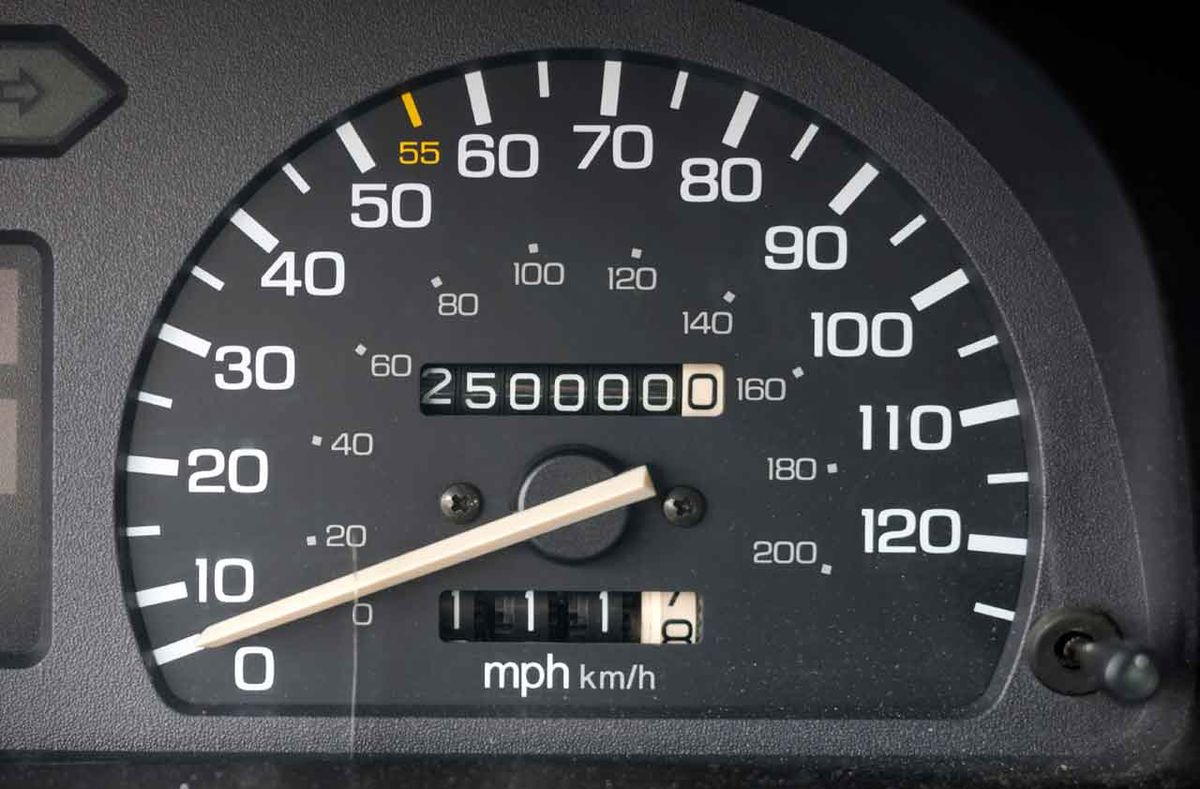
The average car on American roads is now about 12.8 years old, a record according to S&P Global Mobility's 2025 figures, and more and more of them have passed 150,000 miles. Hitting 100,000 miles used to be something to brag about. Today it's closer to the halfway point of a car's useful life. Plenty of owners reach 200,000 miles on cars they bought new, and while 300,000 miles is still unusual, it no longer takes a lucky car to get there.
Whether a car makes it to 200,000 miles isn't random. From most to least important, it depends on the make and model you chose (decided the day you bought it), how consistently it's maintained (entirely up to you), how you drive (also up to you), and luck (the small part you can't control). Choose well and look after the car properly, and 200,000 miles is a reasonable expectation.
Brand Selection: The Most Important Decision You've Already Made
The reliability gap between the best and worst mainstream brands is large, and despite industry-wide improvements it isn't closing much. A well-kept Toyota Camry or Honda Accord has a very good chance of reaching 200,000 miles. A well-kept Lincoln MKZ or Land Rover Defender has a noticeably lower chance. It can happen, but the odds of a big, expensive failure somewhere along the way are higher for those brands at high mileage.
This comes from several independent sources: Consumer Reports' reliability surveys, J.D. Power's Vehicle Dependability Study, iSeeCars' analysis of used listings with 200,000+ miles, and RepairPal's repair cost and frequency data. The same brands keep rising to the top: Toyota and Lexus, Honda and Acura, Mazda, and more recently Hyundai and Kia, at least up to 100,000 to 150,000 miles. How the Korean brands do past 150,000 isn't as well documented yet, but the picture is getting better.
When iSeeCars looked at listings for cars with more than 200,000 miles, the Toyota Tundra, Sequoia, and 4Runner showed up far more often than average, and so did the Honda Ridgeline, CR-V, and Accord. That's no fluke. It comes from decisions about parts quality, build precision, and engineering margins that add up over hundreds of thousands of miles.
If you already own a brand with a patchier record, don't worry. Everything in this guide still applies and will get you well past what a neglected car would manage. But if you're shopping and longevity is a priority, start with the brand. Good maintenance can't make every car equal.
Engine Oil: The Most Impactful Maintenance Decision
If I had to pick the one habit that separates 200,000-mile cars from 100,000-mile cars of similar quality, it would be oil changes. Nothing fancy, just the right oil in the right grade, changed on time, every time.
Good full synthetic oil in the correct viscosity, changed at or before the manufacturer's interval, does more for engine life than anything else you can do. Here's why. Oil is the film that keeps the engine's moving metal parts from grinding against each other. As it ages, it loses its viscosity additives, fills up with combustion byproducts, and turns acidic. The film thins, contamination builds, and tiny amounts of wear pile up on the bearings, cylinder walls, and valvetrain. With fresh oil on schedule, those thousands of hours of running leave an engine with little wear at 200,000 miles. With tired oil, the same hours can leave you needing a rebuild at 120,000.
High-mileage oils, made for engines past 75,000 miles, are worth a mention. They include seal conditioners that slow minor leaks from aging rubber seals, run slightly thicker to make up for normal wear in bearing clearances, and carry extra detergents to clean out deposits. Switching to a high-mileage full synthetic such as Mobil 1 High Mileage, Castrol EDGE High Mileage, or Pennzoil High Mileage somewhere between 75,000 and 100,000 miles costs little, and most high-mileage specialists recommend it.
Cooling System: The Engine's Most Critical Support System
Apart from oil problems, overheating destroys more engines than anything else. The cooling system (radiator, water pump, thermostat, hoses, and coolant) keeps the engine in a narrow temperature window, usually 195°F to 230°F, where combustion, oil thickness, and the expansion of metal parts all work as designed. When the system fails, temperatures climb fast into the range where serious, often permanent damage happens: warped heads, blown head gaskets, cracked blocks, and seized pistons.
Here's how to look after it:
- Flush and replace the coolant every 5 years or 100,000 miles. Modern OAT and HOAT coolants last about that long before their corrosion inhibitors wear out.
- Check every coolant hose once a year for hardness, cracks, or soft spots that point to damage inside.
- Replace the radiator cap around 100,000 miles. Its spring weakens with age, and a cap that can't hold pressure lets coolant boil at a lower temperature.
- Never ignore an overheating warning, even for a minute. Ten minutes of running very hot can damage a head gasket, a $1,500 to $3,000 repair that pulling over right away would have prevented.
Plan ahead for the water pump. Most last 60,000 to 100,000 miles, but some fail with no warning. If your water pump sits behind the timing belt cover and is driven by the belt, replace it whenever you replace the belt. You have to take the belt off to reach the pump anyway, so doing both at once adds very little labor. On chain-driven engines where the pump is easy to get to on its own, replacing it ahead of time at 80,000 to 100,000 miles is sensible insurance, because a planned replacement costs far less than a sudden failure on the road.
Transmission Care: The Expensive Component Nobody Discusses
A transmission rebuild costs $2,500 to $4,500, and a replacement costs $3,500 to $6,000. Repairs that size are what make people ask whether the car is worth fixing at all, whatever the mileage. The main avoidable cause of automatic transmission failure is fluid that has overheated, broken down, or is the wrong type.
Automatic transmission fluid (ATF) protects, cools, and cleans the transmission the way oil does the engine, but owners treat it very differently. Engine oil gets changed every 5,000 to 10,000 miles. Transmission fluid in many newer cars is sold as "lifetime fill," which transmission engineers will tell you usually means "should last past the warranty," not "good for the life of the car." Heat, towing, and hard driving all wear the fluid out in ways that label doesn't account for.
Independent transmission specialists, not automaker marketing departments, generally recommend changing ATF every 30,000 to 60,000 miles regardless of any "lifetime" claim. That goes double if you tow, live somewhere hot, or sit in a lot of stop-and-go traffic. A fluid change costs $80 to $150 at a shop. The difference between a transmission that lasts 250,000 miles and one that gives out at 150,000 is $3,000 to $6,000 in repairs. Few maintenance decisions are easier to make.
Tyres and Suspension: The Vehicle's Structural Health
Worn or misaligned tyres cost you more in fuel and new tyres, and they also put extra strain on wheel bearings, CV joints, ball joints, and steering parts. Those parts wear faster under the sideways forces that come from misaligned or out-of-balance wheels. So alignment and suspension checks aren't only about tyres. They also protect the pricier parts behind them.
An alignment check once a year ($80 to $120) stops the slow drift out of alignment that wears tyres unevenly and speeds up bearing wear. On a well-maintained car, wheel bearings should last 100,000 to 150,000 miles. With ongoing alignment problems, they can fail at 60,000 to 80,000, and each corner costs $250 to $400. CV axle boots, the rubber covers over the joints that carry power to the front wheels, crack with age and weather. Once a boot splits, the grease inside gets flung out and the joint wears out fast. A new boot costs $40 to $80, while a new CV axle costs $150 to $300 per side. Check the boots once a year and replace any that start to crack before the grease escapes.
Driving Habits That Add Years
How you drive in the first few minutes after a cold start makes a real difference to engine wear. An often-quoted estimate is that 75% to 90% of a gasoline engine's lifetime wear happens in the first 30 seconds to 2 minutes after startup, before oil has reached every bearing. Revving hard or merging straight onto a highway during that window makes that wear worse. Drive gently for the first 2 or 3 minutes, keeping it under about 3,000 RPM, until oil pressure settles. It costs nothing and cuts wear.
Engine braking, where you let the engine's compression slow the car instead of using the brakes, saves a lot of brake wear and does no harm to the engine when done smoothly. Downshifting to third or second before a stop instead of riding the brakes can make brakes last 30 to 50% longer on hilly routes or in heavy traffic. Modern engines handle this easily. They're designed for it.
Cut down on trips under 3 miles when you can. Short trips contaminate the oil, drain the battery, and add cold-start wear. If you can't avoid them, try to string several errands together into one longer drive so the engine warms up fully. One warm drive is better for the car than several cold starts through the day.
Which Brands Regularly Reach 200,000 Miles
Used car listings and reliability data keep showing the same models turning up at 200,000+ miles far more often than you'd expect:
- Toyota: Camry, Corolla, Tacoma, 4Runner, Highlander, Tundra, and Sequoia.
- Honda: Civic, Accord, CR-V, Pilot, and Ridgeline.
- Mazda: Mazda3, CX-5, and CX-9 (the CX-9 a little less often than the smaller models).
- Lexus: ES, IS, and RX, all of which share much of their engineering with Toyota.
- Subaru: older-platform models (before 2018) have strong records, while newer ones are more mixed.
The ones that show up least often at 200,000 miles for how many were sold include most domestic luxury brands (Lincoln, and Cadillac at high mileage), Land Rover and Range Rover models, complex high-performance versions like AMG, M, and RS models, and the first model year of any all-new platform. From any brand, first-year cars tend to have more faults than later years, once the factory has worked out the early production problems.
When to Stop Investing in an Old Car
At what point does fixing an old car stop making financial sense? Here's a common rule of thumb. If a repair costs more than the car is worth, think seriously about replacing it before you pay for the repair. If the repair costs less than half the car's value, fixing it is almost always the smart move, because you're protecting more value than you're spending. Between half and full value, it comes down to how many reliable miles the car likely has left and what a replacement would cost you.
There's more to it than that ratio, though. One big repair on a well-maintained high-mileage car doesn't make the car any less reliable going forward. Say a 180,000-mile Toyota Camry with a full service history needs a $1,200 repair. Once it's fixed, you still have a well-kept car worth $6,000 to $8,000 that probably has another 50,000 to 80,000 miles in it. Spending $1,200 to keep a known, well-maintained car like that on the road makes sense. The same repair on a car with skipped maintenance and several other problems brewing is a completely different decision.
The habit that matters most
If you take one thing from this guide, make it this: never miss an oil change. You don't need to change it early, buy special oil, or pour in additives. Just don't skip or badly delay a change. Owners who stick to that on any reliable mainstream car tend to rack up very high mileage. Owners who treat oil changes as optional get far fewer miles out of the exact same car.
Cooling System Maintenance at High Mileage
At high mileage the cooling system needs more than the regular coolant flush. Rubber coolant hoses usually last 8 to 12 years regardless of miles. As the rubber ages, tiny cracks form on the inside where you can't see them, and a hose can burst suddenly under pressure. If a hose feels hard instead of slightly springy when you squeeze it, it's lost its flexibility and is close to failing. From 100,000 miles on, replace hoses on a schedule instead of waiting for them to look bad. A hose that bursts on the road at 120,000 miles means overheating, a tow, and possibly engine damage. Replacing all the radiator and heater hoses ahead of time costs $150 to $350 with labor, which is a small fraction of what a failure can cost.
The radiator also builds up corrosion and scale inside over the years, which cuts how well it sheds heat. A chemical radiator flush, which is more than a simple drain and refill, pumps a cleaning solution through the system to dissolve those deposits before it's rinsed out and refilled with fresh coolant. It's worth adding at the 100,000-mile service, and it can win back cooling capacity that has slowly faded over the years.
Fuel System Care at High Mileage
Most new gasoline engines now use direct injection (GDI), and GDI engines tend to build up carbon on the intake valves. Port-injected engines don't have this problem, because fuel sprays over the valves and keeps them clean. In a GDI engine the fuel goes straight into the cylinder, so oil vapor and carbon collect on the intake valves with nothing to wash them off. By 60,000 to 100,000 miles, the buildup can restrict airflow enough to cause a rough idle, higher fuel use, and the occasional misfire.
The fix is walnut shell blasting, where a shop blows crushed walnut shells through the intake ports to scour the valves clean. It costs $250 to $450 and is worth doing every 60,000 to 80,000 miles on a GDI engine you plan to keep. Some engines are worse than others. German turbo GDI engines (VW and Audi TSI/TFSI) and Korean GDI turbos (Hyundai and Kia Theta and Lambda) tend to build up more carbon than Toyota and Honda GDI engines, which handle crankcase ventilation better. If you have a GDI car and plan to keep it a long time, put intake cleaning on your maintenance calendar before symptoms show up.
Rust Prevention: The Climate-Specific Concern
If you live where roads get salted in winter, which covers most of the northern US, parts of the Mountain West, and coastal areas exposed to sea spray, rust is the most common preventable reason cars get scrapped early. A car can be mechanically perfect and still be unsafe once the frame rails or floor pans rust through, long before the engine or transmission gives out. An undercoating treatment every year, a thorough underbody wash after winter to get the salt off, and touching up chips and scratches that expose bare metal can add 5 to 10 years to a car's life in salty climates. It costs $50 to $100 a year, and most maintenance guides skip it because you don't see the damage until it's too late.
How Maintenance Records Affect Your Resale and Insurance
A car with a documented service history, meaning oil change receipts, service records, and inspection reports, sells for noticeably more than the same car without paperwork. Carfax and similar services now let dealers and private sellers upload service records, and careful used car buyers routinely check them. Keep every receipt and record in one folder, paper or digital. A car with a complete, documented history commonly sells for 5 to 15% more than one whose history is just the seller's word.
Personal auto insurers rarely give discounts for maintenance records today. It comes up more in commercial fleet policies, and it may become more common as insurers use more data from connected cars. The bigger point stands either way: a car with proof it's been looked after is worth more, both at sale time and in your own peace of mind, than one with an unknown past. Keeping records is how you prove the care you've put in.