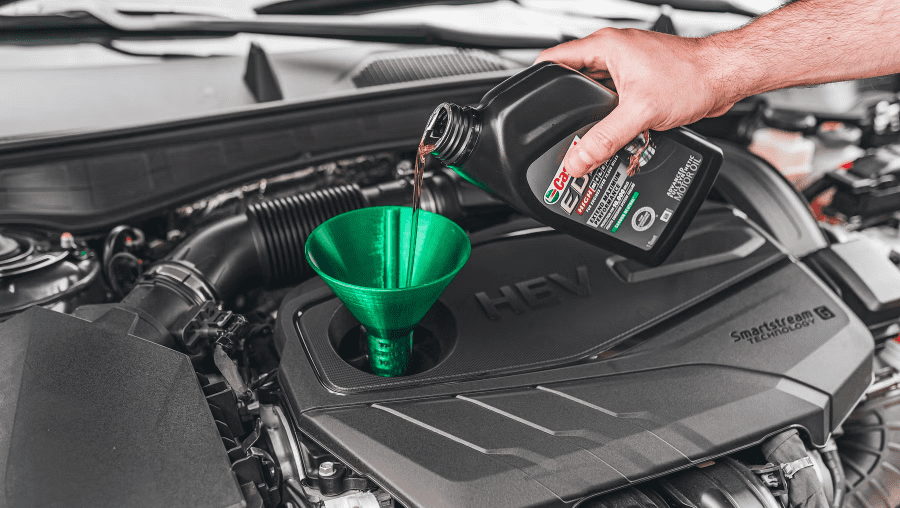
Get your oil changed at almost any quick-lube shop in America and you'll likely leave with a windshield sticker saying you're due again in 3,000 miles or three months. That rule of thumb dates back to around the 1970s, and for most modern cars it has been wrong for two decades. It made sense back then, when engines ran conventional mineral oil, had looser machining tolerances, and used carburetors that let more fuel seep into the oil. On a 2022 Toyota RAV4 running full synthetic in an engine built to micrometer tolerances, a 3,000-mile change does nothing for the engine and wastes your money.
California's recycling agency, CalRecycle, has spent years campaigning against the "3,000-mile myth" because of how much perfectly usable oil ends up drained and thrown away. The environmental point is fair, but the money is what most people notice first. A full-synthetic oil change costs $80 to $120. If you drive 12,000 miles a year and change every 3,000 miles instead of every 7,500, you're paying for about two and a half extra changes a year, roughly $190 to $290, and your engine gets nothing for it.
Below is the real answer, broken down by engine type.
How Engine Oil Degrades
To know why oil needs changing, it helps to know what it does and how it wears out. Oil has four main jobs. It lubricates, cutting friction between moving metal parts. It cools, carrying heat away to the oil pan and cooler. It cleans, holding soot, carbon, and metal particles in suspension until the filter catches them. And it protects, leaving a thin film on metal surfaces that guards against metal-on-metal contact during a cold start, before the oil has fully circulated.
Several things break oil down at once:
- Heat: oil molecules break apart under high heat and pressure. Modern engines run oil at 200 to 250°F in normal driving, with much hotter spots near the turbo and the top of the cylinders.
- Oxidation: oil reacts with oxygen, especially when it's hot, and forms acids that can corrode engine parts.
- Contamination: combustion byproducts such as water, unburned fuel, carbon, and acids slip past the piston rings and valve stems into the oil.
- Additive depletion: the detergents, dispersants, anti-wear agents, and viscosity modifiers in the oil get used up over time and can't be replaced.
Synthetic oil holds up much better against all four. Its base oil is built from uniform, man-made molecules, not the mixed bag of molecules you get from refined crude, so it's more stable under heat and resists oxidation better. That's why full synthetic stays effective for 7,500 to 15,000 miles depending on the engine and conditions, while conventional oil lasts about 3,000 to 5,000.
Modern Oil Change Intervals by Engine Type
| Engine Type | Oil Type | Recommended Interval | Severe Service Interval |
|---|---|---|---|
| Modern naturally aspirated gasoline (2015+) | Full synthetic | 7,500 – 10,000 miles | 5,000 – 7,500 miles |
| Turbocharged gasoline (direct inject) | Full synthetic | 5,000 – 7,500 miles | 3,500 – 5,000 miles |
| Diesel (light-duty truck) | Full synthetic | 7,500 – 10,000 miles | 5,000 miles |
| High-performance / track use | Full synthetic racing grade | 3,000 – 5,000 miles | Every event |
| Older engine (pre-2000, conventional oil) | Conventional or blend | 3,000 – 5,000 miles | 3,000 miles |
| Hybrid gasoline engine | Full synthetic | 5,000 – 7,500 miles | 5,000 miles |
Above all, follow the interval in your owner's manual. If it says 10,000 miles on full synthetic, that number came from the automaker's engineers testing that exact engine. Sticking to it won't void your warranty. Changing more often than the manual asks won't hurt, but it won't add protection either. It just costs more and creates more waste oil.
Full Synthetic Oil: Why It Changed Everything
The move from conventional to full synthetic oil is the main reason oil change intervals have stretched so much over the past 30 years. Knowing how they differ helps you pick the oil your engine needs.
Conventional oil is refined from crude and contains hydrocarbon molecules of all different sizes and shapes. Some are stable. Some evaporate at operating temperature. Some break down under mechanical stress and lose their ability to hold viscosity. That mix is what limits conventional oil's performance and keeps its useful life short.
Full synthetic oil (made from Group IV or V base stocks) starts from a manufactured base, usually polyalphaolefin (PAO) or esters, where the molecules are made to a consistent spec. Those uniform molecules handle temperature extremes better, resist oxidation, evaporate less, and keep their viscosity longer under stress. Synthetics usually carry a better additive package too, with longer-lasting anti-wear compounds and stronger detergents.
Synthetic blend mixes conventional and synthetic base oils and lands between the two on price and performance. For most modern engines, full synthetic is worth the extra cost because it lets you go longer between changes. Changing full synthetic every 10,000 miles costs about the same per mile in oil as changing a blend every 5,000, and you make half as many trips to the shop.
One caveat. Some older, high-mileage engines with worn seals can seep a little oil after switching from conventional to full synthetic, because synthetic oil affects rubber seals slightly differently. Newer engines with healthy seals won't have this problem, but it's worth knowing if you have a car past 200,000 miles with old seals. High-mileage oils, which most big brands sell in full synthetic versions, include seal conditioners to deal with it.
Turbocharged Engines: Why They Need Special Attention
Most new cars now have turbocharged engines, since automakers use small turbo engines to get better fuel economy with the same or better performance. Turbos are much harder on oil than naturally aspirated engines, so it pays to be more careful with oil changes.
A turbocharger is a turbine spun by exhaust gas, and its housing can reach 1,600 to 2,000°F. The turbine spins at 100,000 to 200,000 RPM and relies on engine oil flowing through its center bearing housing. Turn the engine off and the oil pump stops right away, but the turbo keeps spinning for a few seconds and stays very hot with no fresh oil flowing through it. The oil left sitting in the bearing housing soaks up that heat, and if it's already worn out, it can cook into hard carbon deposits much faster than it would in a non-turbo engine.
Turbocharged direct-injection engines have another problem: Low Speed Pre-Ignition (LSPI). It's an abnormal combustion event that happens at low RPM under heavy load, and the pressure spikes it causes can crack piston rings and damage bearings. Oils formulated for turbo GDI engines contain additives that cut down on LSPI. Using the wrong oil, or running badly degraded oil, in one of these engines creates a real risk of damage that simply doesn't exist in a non-turbo engine.
For turbo engines, the advice is simple. Use full synthetic that meets API SP or the newer SQ standard, both of which address LSPI. Stay toward the shorter end of the manufacturer's recommended interval. And after hard driving, let the engine idle for 30 to 60 seconds before switching it off so fresh oil can cool the turbo bearings before the pump stops.
How Your Driving Style Changes the Oil Change Math
Automakers base their standard intervals on "normal" driving. Their "severe" category, which covers how a lot of Americans drive every day, calls for shorter intervals. Knowing which group you fall into tells you whether to use the long or short end of the recommended range.
Severe driving includes:
- Lots of short trips under 5 miles, where the engine never fully warms up and water from combustion builds up in the oil instead of burning off.
- Mostly stop-and-go city traffic, with more heating and cooling cycles and more time idling.
- Very hot or very cold climates, which stress oil in different ways.
- Regular towing or hauling heavy loads, which adds engine load and heat.
- Dusty or dirt roads, which let more particles into the engine.
The one people overlook most is the short-trip commuter. If you drive 3 or 4 miles each way in cold weather, your engine may never reach full operating temperature before you park. Water vapor from combustion then condenses into the oil instead of evaporating out of the crankcase, and over time it thins the oil and encourages corrosion. The easy fix is at least one longer drive a week, so the engine and oil get hot enough to boil that moisture off.
Oil Life Monitoring Systems: What They Do
Most cars built since about 2010 have an oil life monitor that estimates how much life the oil has left based on how you drive, not just how far. Apart from a few high-end models with oil quality sensors, these systems don't test the oil. They run an algorithm using engine RPM, temperature, load, and time to estimate how worn the oil is compared with its service limit.
GM's Oil Life System was the first of these, and many others have copied it since. GM engineers built it by studying how oil breaks down across thousands of combinations of driving conditions, and the algorithm counts down faster when conditions are harsh. So a car that mostly makes short, cold trips might call for a change at 4,000 miles, while the same car driven mostly on the highway could reach 9,000 before the alert comes on. The monitor is reflecting how differently the oil wears in those two cases.
Can you trust yours? On a modern car (2012 or newer) from a mainstream brand, yes, as long as you back it up with a quick check. When the monitor reaches 20% remaining, pull the dipstick and look at the color, smell, and level. Burned oil has a sharp, acrid smell. If the oil is dark brown, which is normal, not black and gritty, and doesn't smell burned, go by the monitor. If it looks badly worn or the level has dropped, change it no matter what the monitor says.
Oil Brand Differences: What Matters
A few big base oil producers and additive suppliers sit behind dozens of motor oil brands. Many brands buy base stocks from the same handful of large refiners, such as ExxonMobil, Chevron Phillips, and TotalEnergies, and then add their own additive packages. A "premium" label doesn't always mean premium performance.
When you pick an oil, three things count. It needs to meet the current API service rating for your engine (SP or SQ for most gasoline engines, CK-4 for most diesels). It needs to meet any manufacturer spec listed in your manual, such as BMW LL-01, Mercedes 229.5, or Porsche A40, where one is given. And it needs to be the viscosity grade your manual calls for, whether that's 5W-30, 0W-20, 5W-40, or something else.
In used-oil analysis from labs like Blackstone and in independent comparison tests such as Project Farm's, a few brands keep doing well: Mobil 1, Castrol EDGE, Royal Purple, Pennzoil Platinum (or Ultra Platinum for long intervals), and AMSOIL Signature Series. They use high-quality PAO or ester base stocks with strong additive packages, and that's what earns their higher prices if you run long intervals. Store-brand full synthetics are fine for standard intervals but often don't hold up as well past 10,000 miles, which is the kind of interval the premium brands are built and tested for.
Choosing the Right Oil Grade: 0W-20 vs 5W-30 and Beyond
Oil viscosity uses two numbers. The first (0W, 5W, 10W) describes how easily the oil flows when cold, which affects how fast it reaches vital parts on a cold start. The second (20, 30, 40, 50) is how thick the oil is at operating temperature, which sets how strong its protective film is under load.
The rule that matters most is to use the grade your manufacturer specifies. Modern engines are built around a particular viscosity. Thicker oil doesn't mean more protection. It flows more slowly to key parts on a cold start, so lubrication gets worse, not better. Putting 5W-30 in an engine designed for 0W-20 won't wreck it overnight, but it can cost you a little fuel economy and won't protect the engine any better.
The shift toward thinner oils like 0W-16 and 0W-20 comes down to two things. Tighter engine tolerances need less film thickness for protection, and thinner oil cuts pumping losses, which helps fuel economy. If you grew up with 10W-40, these thin oils can feel wrong, but they're right for the engines that call for them and protect a healthy engine very well.
The Oil Filter You Should Never Cheap Out On
The oil filter pulls metal wear particles, carbon, and dirt out of the oil so they don't keep cycling through the bearings and other precision parts. A $3 budget filter and a $12 premium filter look much the same from the outside, but they don't perform the same.
Premium filters from brands like Wix, Mobil 1, K&N, and Bosch Premium use better media that traps smaller particles, often down to 20 to 25 microns compared with 40 to 50 for budget filters. Their anti-drain-back valves are also better at keeping oil in the filter while the car sits, so oil gets where it needs to go faster on startup. And they're built strongly enough that the bypass valve keeps working correctly for the whole interval. If you run 7,500 to 10,000 miles between changes, a filter that starts bypassing at 5,000, sending unfiltered oil around the element, defeats the point of the long interval.
Pick a filter rated for at least as long as your interval. If you change oil every 10,000 miles, use a filter rated for 10,000 miles or more. Wix, which is sold under its own name and under several store labels including NAPA Gold, is a favorite of many professional mechanics for consistent quality at a fair price.
How to Check Your Oil Between Changes
Check your oil level and condition once a month, or every 1,000 miles if that comes sooner. It's the habit that catches problems before they turn serious. A two-minute dipstick check can show early signs of oil burning (oil getting past the rings or valve seals), leaks, and coolant getting into the oil.
To check it, park on level ground and wait about five minutes after shutting the engine off so the oil drains back into the pan. Pull the dipstick, wipe it clean, push it all the way back in, then pull it out again and read it. The level should be between MIN and MAX, ideally closer to MAX. Wipe some on a clean white cloth to judge the color. Fresh oil is golden or amber, lightly used oil is brown, and well-used oil is dark brown. Oil that's due for a change right away is blackish and feels gritty between your fingers. Milky or creamy oil means coolant is getting in, often from a failed head gasket, and needs attention right away whatever the mileage.
Building Your Personal Oil Change Schedule
Your ideal schedule comes from three things: what the manufacturer says, how you drive, and what oil you use. Put them together and you get an interval you can plan around.
Step 1: Read your owner's manual and find the oil change interval for your car with the recommended oil. That's your starting point.
Step 2: Work out whether your driving counts as severe: short trips under 5 miles, extreme temperatures, heavy loads, or dusty roads. If it does, use the short end of the range.
Step 3: Make sure you're using the right oil type and viscosity. If the manual says 0W-20 full synthetic, use that, not a conventional oil, not a blend, and not a different grade.
Step 4: If your car has an oil life monitor, trust it, but check the oil yourself when it reaches 20%. Plan the change for when the monitor reads 0 to 15%. Hitting 0% means the algorithm thinks the oil has reached the end of its service life, not that the engine is in danger.
For a modern car on full synthetic with normal driving, here's a simple rule: change the oil every 7,500 miles or once a year, whichever comes first, using the correct grade and a good filter. That works for most modern cars and clears up most of the confusion about when to change oil.
The most important oil maintenance habit
Check your oil level every month. Forget the color and condition for this one and just look at the level. Many engines burn a little oil, and most automakers consider a quart every 3,000 miles acceptable, so the level can fall too low between changes if nobody looks. Running a quart low noticeably cuts the oil's ability to cool and clean and speeds up wear. Two minutes a month prevents it.