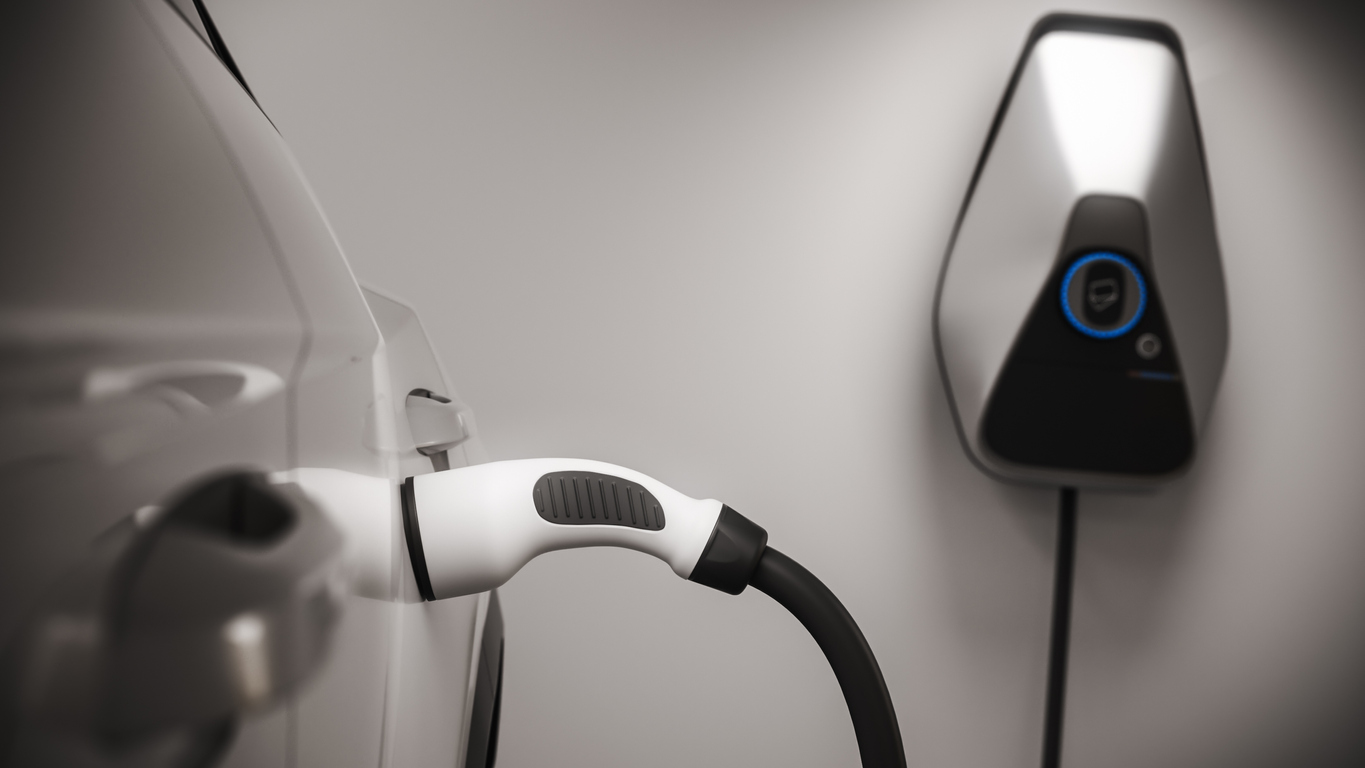
New EV buyers tend to treat home charging as an afterthought. They spend weeks researching the car and very little time on the thing that will charge it every night. That's a mistake. Out of the box, most new owners are left with a regular wall outlet and the cable that came with the car, which adds only about 3 to 5 miles of range per hour. That's okay for light driving if you plug in every single night, but one busy day and you're watching the battery gauge more closely than you should have to.
A Level 2 charger changes things completely. Overnight charging goes from plugging in and hoping it's enough to waking up to a full battery every morning, no matter what you did the day before. Going from managing your charging to barely thinking about it is what turns plenty of EV doubters into fans. So your home charging setup deserves as much thought as the car itself.
Here's what you need, in the order that counts.
Why Level 2 Charging Is Not Optional for Daily EV Drivers
Level 1 charging uses a standard 120V household outlet and the portable cable that usually comes with the car. It adds roughly 3 to 5 miles of range per hour, so an 8-hour night gets you 24 to 40 miles back. If you drive under 30 miles a day and always plug in, that can technically work. In real life the margin is thin. A longer day than usual, a night you forget to plug in, or a cold snap that saps efficiency, and you start the next day with less range than you planned for.
Level 2 charging runs at 240V, the same as your oven or clothes dryer, and adds about 15 to 30 miles of range per hour, depending on how much power your car can accept. Eight hours on Level 2 gives you 120 to 240 miles, enough to fill almost any EV on the market from nearly empty. You stop thinking about charging, because the car always has more range in the morning than you used the day before. In our experience, that shift from managing charging to simply owning a car does more for day-to-day EV happiness than almost any feature on a spec sheet.
A Level 2 charger plus installation typically costs $600 to $1,400 all in. It's the most important accessory an EV owner can buy, and it should be budgeted as part of the cost of the car, not something to think about later.
Electrical Requirements: What You Need to Know Before Calling an Electrician
Level 2 charging needs its own 240V circuit that doesn't share a breaker with anything else in the house. The circuit size depends on the charger's maximum current. Because EV charging counts as a continuous load, the circuit has to be rated 25% above what the charger draws. A 32-amp charger needs a 40-amp circuit, a 40-amp charger needs a 50-amp circuit, and a 48-amp charger needs a 60-amp circuit.
Before you buy a charger, find out whether your electrical panel has room for the new circuit. A 200-amp panel that's already heavily loaded might not handle a 50 or 60-amp EV circuit without an upgrade, and that can add $1,500 to $3,500 to the job. An electrician can check your panel in about 15 minutes. Make that call first, before you pick a charger or buy anything, so you know what amperage your home can support.
If your panel has spare capacity, which is common in homes built or rewired in the last 20 years, a dedicated 50 or 60-amp circuit usually costs $200 to $600 in labor plus $30 to $80 in materials. It's a routine 2 to 4 hour job for any licensed electrician. Without a panel upgrade, going from nothing to working Level 2 charging typically costs $600 to $1,200 for the charger and installation combined.
Installation: Planning Decisions That Matter
Three installation choices will stick with you for years: where the charger goes, how long the cable is, and whether it plugs into an outlet or gets hardwired.
Put the charger where the cable can easily reach your car's charge port without being stretched across the path you walk or drive through. Charge ports are usually on the front left, rear left, or front right of the car, depending on the model, so find yours and mount the charger on the nearest wall with some slack in the cable. If you have two EVs, a spot in the middle of the wall with a long cable might work for both, or two separate circuits could be the better plan.
Cable length matters for the same reason. Too short, and you'll be pulling on the connector. Too long, and you'll have extra cable tangling on the floor. Most Level 2 cables are 18 to 25 feet, which works for most single-car garages. Measure from where the charger will go to where your charge port will be before you buy. Some setups need a good 20 feet to reach comfortably.
Many chargers can either plug into a NEMA 14-50 outlet or be hardwired straight into the circuit. A plug-in charger can come with you if you move, leaving the outlet behind. Hardwiring is more permanent but looks tidier, and some chargers only allow their highest power setting when hardwired. If you rent or expect to move, plugging in is the practical choice. If you're staying put, either works, and hardwiring gives the cleanest result.
1. ChargePoint Home Flex: Best Overall (~$600)
The ChargePoint Home Flex takes the top spot thanks to its adjustable power, excellent app, and connection to ChargePoint's wider network. The same account and payment method you use at ChargePoint's many public stations also runs your home charger, so all your charging history and costs show up in one place.
Its adjustable current is the standout feature. Using the app, you can set it anywhere from 16 to 50 amps. That means it'll work properly whether your electrician runs a smaller circuit or a 60-amp one, and you can turn it up later if you upgrade your electrical service. If you aren't sure how much capacity your panel has when you buy, the Home Flex is the safe choice, because it adapts to whatever you end up with.
ChargePoint's app is one of the best home charging apps around. It logs every session with times and energy used, estimates your costs from your electricity rate, lets you schedule charging for cheaper off-peak hours, and shows home and public charging together. If you want to understand and cut your charging costs, the level of detail is useful.
The Home Flex also works with Amazon Alexa and Google Assistant, and in many areas it can join utility demand-response programs. In those programs, you let your utility briefly slow or pause charging during times of peak grid demand in exchange for bill credits. Because most peak events happen in the late afternoon or early evening, while most home charging happens overnight, many owners barely notice any effect.
2. Tesla Universal Wall Connector: Best for Mixed-Brand Households (~$600)
The Tesla Universal Wall Connector solves a very 2026 problem: households with a mix of plug types. It has a NACS (Tesla-style) connector with a built-in J1772 adapter that stays attached to the handle, so it can charge a Tesla, a newer EV with a NACS port, or an older EV with a J1772 port, with no loose adapters to lose.
It delivers up to 48 amps on a 60-amp circuit, about 11.5 kW, which is enough to take full advantage of the faster onboard chargers in many current EVs. Wi-Fi connectivity allows firmware updates and scheduling, and multiple units can share a single circuit, splitting power between cars as needed.
If you have one Tesla and no plans to own another brand, the regular Tesla Wall Connector below costs less. If you have both a Tesla and a non-Tesla EV, or you're not sure what your next car will be, the Universal Wall Connector is the most future-proof charger here.
Note: This spot previously featured the JuiceBox 48. Its maker, Enel X Way, shut down its North American business in October 2024, and the JuiceBox app stopped working for owners. We no longer recommend buying a JuiceBox.
3. Tesla Wall Connector (Gen 3): Best for Tesla Owners (~$475)
For Tesla owners, Tesla's own Wall Connector is the easy pick. It has a native NACS plug, so no adapter is needed, delivers up to 48 amps, works smoothly with the Tesla app for scheduling and energy tracking, and costs less than most premium chargers. It also looks the part: slim, minimal, and neat on a garage wall, if you care about that sort of thing.
The Gen 3 connects over Wi-Fi for app features and occasional firmware updates that add features or fix bugs. Power sharing is especially handy for homes with two Teslas. A single circuit can feed two Wall Connectors, and the power is split automatically between the cars plugged in, so you don't need two separate 60-amp circuits.
Non-Tesla EVs with a J1772 port can use this Wall Connector with a NACS-to-J1772 adapter, but the experience isn't as smooth. For a household that mixes Tesla and non-Tesla EVs, the Universal Wall Connector above is the better choice.
4. Emporia Smart EV Charger: Best Budget Smart Option (~$299)
If you want the cheapest smart Level 2 charger that's still worth buying, Emporia is the best answer. It's one of the lowest-priced smart chargers from an established brand, and it delivers up to 48 amps, Wi-Fi, app scheduling and energy tracking, and off-peak charging tools that do the same core job as the premium chargers. The app isn't as polished as ChargePoint's, with fewer history views and slower connections, but it reliably handles the main task of charging your car during cheaper hours.
Emporia started out making home energy monitors, and that shows. The charger ties into Emporia's energy monitoring system, so you can see EV charging as part of your whole home's electricity use, context standalone charger apps can't provide. If you already use an Emporia energy monitor, or you want to track your total power use with the EV included, that's a real plus. It can also be set up to charge from excess solar production if you have panels and the right Emporia hardware.
It has some limits. The build feels less premium than ChargePoint's, and Emporia is a smaller company with a shorter track record in EV charging. But if you want smart features for the lowest price from a legitimate brand, it's a strong choice.
5. Grizzl-E Classic: Best Simple and Weatherproof (~$299)
The Grizzl-E takes a different approach from the rest of this list. It's simple on purpose and tough on purpose. There's no Wi-Fi, no app, no scheduling, and no remote monitoring. You plug it in, it charges your car, and it stops when you unplug. If you don't want to think about any of the extra stuff, this is your charger.
Built by United Chargers in Canada, the Grizzl-E is designed for harsh winters and outdoor installs. It has a rugged, water-resistant aluminum housing and a heavy-duty cable that stays flexible in the cold. If you're installing in an unheated garage in a cold state or out on a driveway, that toughness is the whole point.
The Classic tops out at 40 amps, and its current can be set to match your circuit during installation. At 40 amps it delivers 9.6 kW, which is plenty for most EVs and will charge a 75 kWh battery from 20% overnight without trouble. Without any smart features, you'll need to use your car's own charging schedule to take advantage of off-peak rates. If that's fine with you, it's one of the most dependable set-and-forget chargers you can buy.
Smart Charging Features: Which Are Worth Paying For
Smart chargers come with a list of connected features, and some are far more useful than others. Here's our take on which ones earn their keep:
Time-of-use scheduling: very worthwhile. If your utility has time-of-use rates, this feature alone can cover the extra cost of a smart charger. Automatically waiting until off-peak hours, often late evening to early morning, can save a couple of hundred dollars a year or more where the price gap between peak and off-peak power is large. Set it up once, check it every few months, and the savings take care of themselves. Keep in mind that most EVs can also schedule charging themselves, so a basic charger plus your car's app can do the same job.
Energy monitoring and reports: nice to have, not essential. Seeing how much energy you've used, what it cost per kWh, and when you charge is interesting, especially for new owners trying to understand their electricity use or households watching their energy budget. If you just want the car charged and don't care about the data, it adds little.
Voice assistant integration: a novelty. Asking Alexa how charged your car is gets old after about a week for most people. The same info is easier to see in your car's app or on the dash. It's not a reason to pick or skip a charger.
Demand-response programs: easy bill credits. Programs that pay you in credits for allowing short charging pauses during peak demand are legitimate and usually cost you nothing in practice, because peak events rarely overlap with overnight charging. If your utility runs one that works with your charger, signing up takes a few minutes. It's worth doing, but it shouldn't decide which charger you buy.
Adapters Every EV Owner Needs in 2026
Adapters are more confusing than they should be right now, because North America is in the middle of switching from the CCS/J1772 plug to Tesla's NACS plug. Which ones you need depends on the port your car has. Here are the common ones:
J1772-to-NACS adapter (for Teslas and NACS-port cars at J1772 stations): Lets a car with a NACS port plug into the many public Level 2 stations that still use J1772 connectors. Tesla sells one, and some other automakers include one with their NACS-port cars. It's small, cheap, and worth keeping in the car.
NACS-to-J1772 adapter (for J1772-port cars at Tesla Level 2 chargers): Lets an older CCS/J1772 car use Tesla Wall Connectors and Tesla destination chargers at hotels and restaurants. Look for one from a reputable brand with proper safety certification.
DC fast charging adapters: CCS cars can use many Tesla Superchargers with a NACS-to-CCS fast charging adapter, and newer non-Tesla cars with NACS ports may need a CCS-to-NACS adapter for older fast chargers. Use the adapter your automaker supplies or approves, or at least one certified to the relevant safety standard (UL 2252). Some automakers warn that uncertified adapters can void warranty coverage. Check in your car's app or the Supercharger map which stations your car can use.
Outlet adapters for your travel cable: Many portable charging cables come with, or can use, a NEMA 14-50 plug. Some campgrounds, RV parks, and workshops have other outlets, like NEMA 6-50 or TT-30. The right adapter from a reputable seller (usually $20 to $40) lets you charge in more places while traveling. Only use adapters that match the circuit's voltage and current rating, and never daisy-chain them.
Tax Credits and Utility Incentives for Home Chargers
The federal home charger tax credit (the Alternative Fuel Vehicle Refueling Property Credit, claimed on Form 8911) used to cover 30% of equipment and installation costs, up to $1,000. The One Big Beautiful Bill Act ended it early. Only chargers placed in service by June 30, 2026 qualify. If yours was installed and working by then, you can still claim it on your 2026 tax return, provided you meet the location rules. Chargers installed after that date don't qualify.
Utility rebates are now the main incentive, and many are still available. Utilities including PG&E, Xcel Energy, Eversource, and many regional providers have offered rebates for installing qualifying Level 2 chargers, sometimes several hundred dollars, and some offer special EV electricity rates as well. Check your utility's website under "EV programs" before you buy anything. Many rebates only apply to certain charger models, and some require you to enroll in a managed charging program, so knowing the rules first saves you from buying a charger that doesn't qualify.
Some states and cities run their own programs too. States like California, New York, Massachusetts, and Colorado have offered incentives that can lower installation costs further, though funding and rules change often. Stacking a utility rebate with a state program can still make a real dent in the total cost, so it's worth a few minutes of research before you book the electrician.
The decision that changes EV ownership
The best thing you can do to make EV ownership easier is get a Level 2 charger installed before your car arrives or right after. Not in a few months, and not when you get around to it. Many buyers spend two or three months on slow Level 1 charging before upgrading, and that's a stretch of hassle that didn't need to happen. When you're working out whether an EV makes financial sense, include the charger and installation in the cost. It's part of the package, not an optional extra.