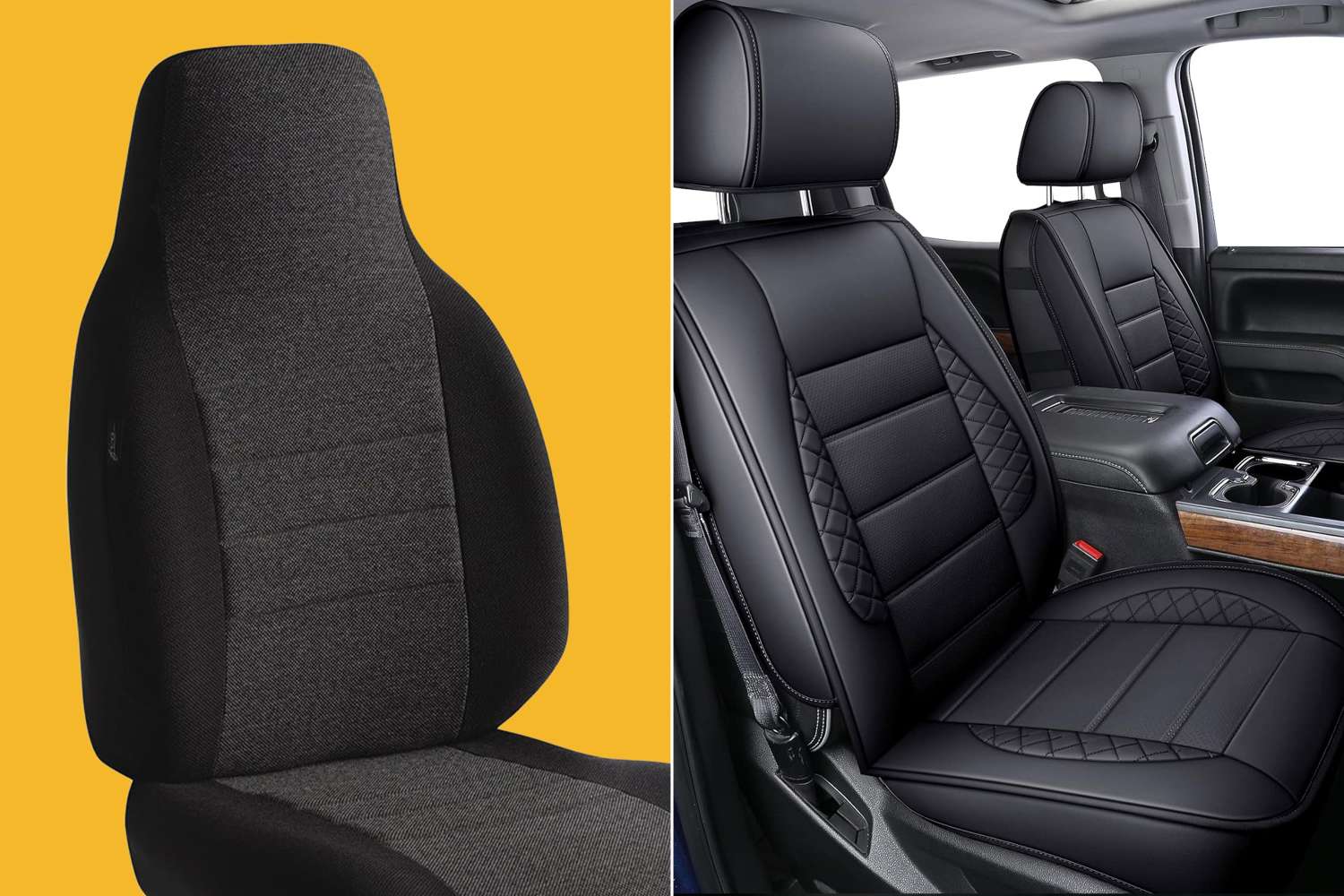
Seat covers split drivers into two camps: people who need them and people who really don't. If your car stays clean and never carries pets, muddy boots, kids with snacks, or work gear, putting covers on nice seats is usually a step backward. Most covers look worse than the factory upholstery, they can block airflow from heated and cooled seats, and the wrong ones can even get in the way of side airbags. Don't fit them just because you can.
If you're in the other camp, though, a good set of covers is one of the best-value accessories you can buy. That includes dog owners, outdoorsy types, parents of young kids, and anyone trying to protect aging seats or hide worn ones. The case is especially strong if you lease and want to avoid excess wear charges, or if you plan to sell the car in 3 to 5 years and want to protect its value. A $350 set of neoprene covers can save you $800 in wear deductions at lease return or trade-in, which more than pays for them, and you get clean seats every day in the meantime.
With that in mind, here's what's worth buying, grouped by how you'll use them instead of by price.
The Side Airbag Warning You Cannot Skip
We're starting here because it affects every cover on this list, and getting it wrong can hurt someone, not just cost you money. Many modern cars, including most built in the last 15 years, have side airbags built into the outer edge of the front seat backs, and some have them in the rear seats too. These airbags are designed to burst out along a set path with a set force, through a special seam in the seat upholstery.
If a seat cover wraps the whole seat back without a matching opening or tear-away seam over that spot, it can block or redirect the airbag. That can delay deployment, so you aren't protected in the first crucial milliseconds of a crash. It can send the airbag in the wrong direction, which can cause injuries of its own. Or it can stop the airbag from deploying properly at all. Safety experts and airbag makers warn about exactly this.
We've noted airbag compatibility for every cover on this list, and it isn't something to ignore because the price is right. Before buying any seat cover, make sure the listing clearly says it's compatible with seat-mounted side airbags, and check that it's designed around the airbag zones in your car's seats. If the listing doesn't mention it and you can't confirm it with the manufacturer, don't buy it. Covercraft, Katzkin, and Rough Country all design their products with airbags in mind. Many generic marketplace covers don't.
Universal vs Custom Fit: The Decision That Determines Everything
The biggest decision you'll make isn't material, brand, or price. It's whether you buy universal-fit covers or custom-fit covers made for your car's seats. That one choice affects looks, airbag safety, how easy they are to fit, and how well they stay in place more than anything else.
Universal covers use elastic and adjustable straps to roughly fit a wide range of seats. They work, they're easy to put on, and they protect the seat underneath. But they never fit like factory upholstery. You'll see some slack in places and bunching in others, and they can shift as you use them, so you'll be tugging them back into place now and then. On sculpted sport seats or power seats with big side bolsters, universal covers fit worse and look more obviously aftermarket than on simple flat seats.
Custom covers are cut and sewn from patterns based on your car's exact seats, much like factory upholstery. They fit snugly, don't slide around, work around armrests, adjustable bolsters, heated seat controls, and airbag zones, and are usually designed to be airbag-safe from the start. They cost more, often 3 to 6 times as much as universal covers, but you can see the difference in quality side by side.
If the car is used for work, outdoor trips, or hauling dogs, and the covers will need heavy cleaning often, universal covers can be the more practical choice. They come off easily, go in the wash or get hosed down, and go back on. If looks matter and you mainly want to protect the seats from everyday wear, custom covers are worth the money.
1. Covercraft SeatSaver Polycotton Custom-Fit Covers: Best OEM-Quality Fit (~$120 to $200 per seat)
Covercraft has been making custom-fit car covers and seat covers for decades, and its SeatSaver line is the affordable way to get a fit made for your car without paying Katzkin prices. The covers are cut from patterns for your exact seats, and they come with hooks, straps, and seat-belt openings designed for your car's seat layout.
The Polycotton version uses a heavy-duty fabric with a rugged, denim-like feel. It's durable, water-resistant, machine washable, and comes in colors that go with most factory interiors. It also breathes much better than vinyl or neoprene, which is good news for heated and ventilated seats. Because the covers are made for your specific seats, they account for seat controls and other features that universal covers tend to cover up. Covercraft also offers other fabrics in the SeatSaver range, including a waterproof option and tough Carhartt duck, if you need something more heavy-duty.
Custom covers like these are easy to fit because they're shaped for your seats, not stretched to fit them. The pieces follow the seat's shape, the fasteners attach at set points, and each seat typically takes 20 to 30 minutes with no tools. The finished result looks tailored to the car, not like something added afterward.
Expect to pay $120 to $200 per front seat, depending on the seat (power seats with adjustable lumbar and bolsters cost more than simple manual seats), and $150 to $250 for a rear bench. Starting with just the front seats makes sense. They get the most wear and are the first thing a buyer looks at.
2. Rough Country Neoprene Seat Covers: Best for Outdoor and Pet Use (~$180 to $250 per set)
Neoprene is the stuff wetsuits are made of, which tells you what it's good at. It keeps water out, dries fast, and holds up to getting soaked and scuffed in ways fabric and fake leather can't. If your seats regularly meet wet dogs, muddy hiking gear, wetsuits, damp swimwear, or job site materials, neoprene protects them better than anything else.
Rough Country's neoprene covers are made for specific vehicles, unlike many neoprene covers that are closer to one-size-fits-all, so they fit well enough for daily use without the gaps and bunching of universal covers. They're designed to work with airbags on the models they cover. The material is thick enough to add a little cushioning without changing how the seat feels, unlike some covers that sit half an inch to an inch above the seat and eat into headroom in cars with a low roof.
For dog owners and outdoor types, neoprene's easy cleaning is a big deal. Dog hair works its way into fabric covers and takes serious brushing or vacuuming to get out. On neoprene, it sits on the surface and wipes off with a damp cloth. Mud, dirt, and water come off in seconds, too. If you have pets and fabric covers now, switching to neoprene turns a 20-minute cleaning job into a 2-minute one.
The one real downside is summer heat. Neoprene doesn't breathe, so it soaks up heat in direct sun, and after the car's been parked in the sun the seats can be too hot to sit on comfortably for a minute. If you live somewhere hot and park outside, think about whether you can live with that before you choose neoprene. Mesh covers, covered below, are a better choice if staying cool is your priority.
3. FH Group Universal PU Leather: Best Budget (~$30 to $50 per set)
At $30 to $50 for a full front and rear set, FH Group's faux leather covers are about the cheapest way to get proper seat protection. From a few feet away they look like leather, they go on in 20 to 30 minutes with no tools thanks to elastic underneath, and they protect against spills, light scratches, and everyday dirt. Look closely, though, and you'll see they're a budget product. The seams and backing give it away, and the fit has the gaps and bunching you get with any universal cover.
They make the most sense in an older car where the original seats are already worn or damaged, you want them to look better for as little money as possible, and you aren't selling the car soon, so resale doesn't matter. On a 2014 Honda Accord with 120,000 miles and a cracked driver's seat, a $40 set of FH Group covers makes the cabin nicer for almost no money.
The airbag warning still applies. Make sure the specific set you buy is compatible with your car's side airbags. FH Group sells airbag-compatible versions, and the listings say so clearly, but not every set is, so check the exact listing before you order.
4. Katzkin Leather Seat Covers: Best Premium Upgrade (~$800 to $1,200 installed)
Katzkin is in a class of its own, because these aren't really seat covers. They're replacement upholstery. The factory seat foam stays, the original fabric or leather comes off, and custom-made leather goes on, fitted by Katzkin-trained installers to match the seat's original shape. Done properly, you can't tell it apart from a factory leather interior. Not "looks close." You can't tell.
Katzkin only sells through authorized installers, usually specialist auto trim shops and some dealers. The price covers the leather kit cut for your car's exact seats and professional installation by someone trained to fit it. That takes away the risks of airbag problems, poor tension, or sloppy details you'd notice every day. The materials are built to last like factory leather, and with basic care they can last as long as the car.
Here's how the money works out. On many cars, factory leather adds $1,500 to $2,500 over the cloth version. Katzkin at $800 to $1,200 installed gets you much the same result for roughly half to three-quarters of that, and you can add it to a used car that came with cloth. If you bought a cloth-seat car and wish you'd gone for leather, Katzkin is the real fix, and plenty of dealers recommend and install it themselves.
One more thing. On cars where leather is a desirable option, a Katzkin upgrade can help resale value. As long as the install is high quality, many used car buyers and appraisers treat professionally installed Katzkin leather much like factory leather. It's the only product on this list where you have a real chance of getting some or all of your money back when you sell.
5. Ruffwear Dog Seat Cover: Best Specifically for Pet Owners (~$100 to $150)
Ruffwear makes outdoor gear for active dogs, and its car seat cover is built with the same mindset. It's designed around big, energetic, often wet dogs, not as a general seat cover that happens to work with pets.
The key feature is that it can be set up as a hammock. The top edge clips to the front headrest posts and the bottom attaches to the rear seat, making a sling that protects both the back seat and the backs of the front seats. That stops the classic problem of a big dog planting its paws on the back of the driver's seat and leaving scratches and dents over time. The hammock also keeps dogs from sliding into the gap between the front and back seats in a hard stop, which is a nice safety bonus.
The cover is water-resistant and designed for the reality of a wet dog shaking off the moment it jumps in. The straps are sturdy webbing, not stretchy elastic, so they hold tension well and don't lose their grip after being put on and taken off many times. A non-slip backing keeps the cover from sliding around when your dog moves, which is the number one complaint about cheaper dog covers.
For the odd trip to the vet or dog park, any basic cover will do. If you drive a medium or large dog around every day, Ruffwear's cover is built for the job and saves you from covers that slide, fur that sticks, and clean-ups that take longer than the drive.
6. OxGord Mesh Seat Covers: Best for Hot Climate Breathability (~$60 to $90 per set)
Mesh covers solve one specific problem: seats that scorch your legs after the car sits in the summer sun. Fabric seats soak up heat and give it off slowly. Leather and faux leather get much hotter than fabric and stay hot longer, and neoprene is worse still. Mesh lets air move between the cover and the seat, so the surface stays a lot cooler than any solid cover.
In hot weather, the difference is obvious. After sitting in full sun, a seat with a mesh cover is noticeably cooler to the touch than a bare leather seat or a neoprene-covered one. That can mean sitting down right away instead of hovering awkwardly while the seat cools off. If you live in the Southwest, Florida, or anywhere else with long, hot summers, that's a comfort upgrade you'll notice every day.
Mesh has clear downsides too. It isn't waterproof, so a spilled drink goes right through. It doesn't stand up well to wear, since dog claws can snag it. And it looks fairly generic. If you want mesh for the airflow and can live with those trade-offs, OxGord's mesh covers at $60 to $90 for a front pair are good value. They're universal fit, not made for your car, so don't expect a tailored look.
Installation: What Matters and What Doesn't
The most important part of fitting seat covers is getting them tight across the seat. A loose cover bunches, slides, and creates lumps you'll feel when you sit down. Custom covers usually go on tight by themselves because they're cut to size. Universal covers need some work. Pull the elastic tight under the seat, push the headrest section all the way down, and tuck the seat base section fully into the gap between the cushion and the backrest instead of leaving it sitting on top.
The least important part is which seat you do first. Most instructions suggest starting with the driver's seat to learn the process, then repeating it on the others, but the order doesn't change the result. Do whatever's easiest in your space.
One step does matter for safety. If your car has side airbags in the seats, check that the cover's airbag seam or opening lines up with the airbag area once it's on, before you drive. This matters most with universal covers, where it's easy for the seam to end up in the wrong place. If you're not sure it's right, contact the manufacturer or have an installer check it.
Cleaning and Maintenance by Material
Fabric covers (Covercraft Polycotton, most budget universal covers): spot-clean light marks with a mild upholstery cleaner. For a deeper clean, take them off and machine wash on a cold, gentle cycle, then tumble dry on low. Skip bleach and hot water, which can shrink them so they don't fit properly. Putting them back on while still slightly damp helps them settle to the shape of the seat.
Neoprene covers (Rough Country): wipe them down with a damp cloth for everyday cleaning. For a deep clean, take them off, rinse with cool water, use a little diluted liquid detergent if needed, rinse well, and hang them until completely dry before refitting. Don't machine wash neoprene, because the tumbling can make the layers separate over time.
PU leather covers (FH Group and similar): wipe with a damp microfiber cloth day to day, and use a mild vinyl cleaner for a deeper clean. Avoid harsh solvents, which make faux leather crack and peel. Apply a vinyl conditioner every 3 to 6 months to keep the surface from cracking early and exposing the fabric backing.
Katzkin leather: care for it exactly as you would factory leather. Condition it now and then, clean up spills quickly, and avoid leaving it in direct sun for long periods, which dries leather out and makes it crack.
Impact on Vehicle Resale Value
Seat covers can affect resale value in two ways. They can protect or improve it by keeping the original seats from wearing out, or they can hurt it by hiding perfectly good seats under covers that look aftermarket to a buyer. Which way it goes depends on the quality of the covers and the condition of the seats underneath.
The best case for resale looks like this: good custom covers go on when the seats are new, stay clean and well fitted the whole time you own the car, and come off before you show the car to buyers, revealing seats that look almost new. Dealers and resellers do the same thing to protect stock. The covers pay for themselves when the seats look like new instead of looking like they've done 50,000 miles.
The worst case is cheap universal covers that have shifted, pilled, and faded over a few years, sitting on top of seats that are probably fine but that a buyer can't see without pulling the covers off. Many buyers won't bother or won't ask. Covering the original seats with obviously aftermarket covers can make buyers wonder what you're hiding, whatever's actually underneath.
The Most Common Seat Cover Mistake
The most costly mistake is choosing covers mostly on price and ignoring airbag compatibility and fit. A $25 set of universal covers that blocks a side airbag or slides around constantly doesn't keep you safe. It doesn't protect the seats well either, because covers that shift leave the edges exposed to the dirt and wear they were meant to stop. And you'll be annoyed every time you have to pull one back into place. That's where most "seat covers are a waste of money" reviews come from: people who bought the wrong product.
Spending on a quality product is what separates the good experience from the bad one, whether that's Covercraft at about $150 a seat, Rough Country neoprene at around $200 a set, or Katzkin at about $1,000 installed. A cheap universal cover and a $1,000 Katzkin install aren't even the same kind of product. Pick the right one for your needs and budget, and you'll be happy with it.
Before buying anything: check your side airbags
Look at the outer side of your front seat backs. If you see a tag or stitched label reading "SRS Airbag" or "Airbag," or a vertical seam a few inches in from the outer edge, your seats have built-in side airbags that deploy through that area. Any cover you fit must have a matching tear-away seam or opening in the same spot. That isn't optional. If you're not sure whether your seats have side airbags, check your owner's manual or ask your dealer before you buy.