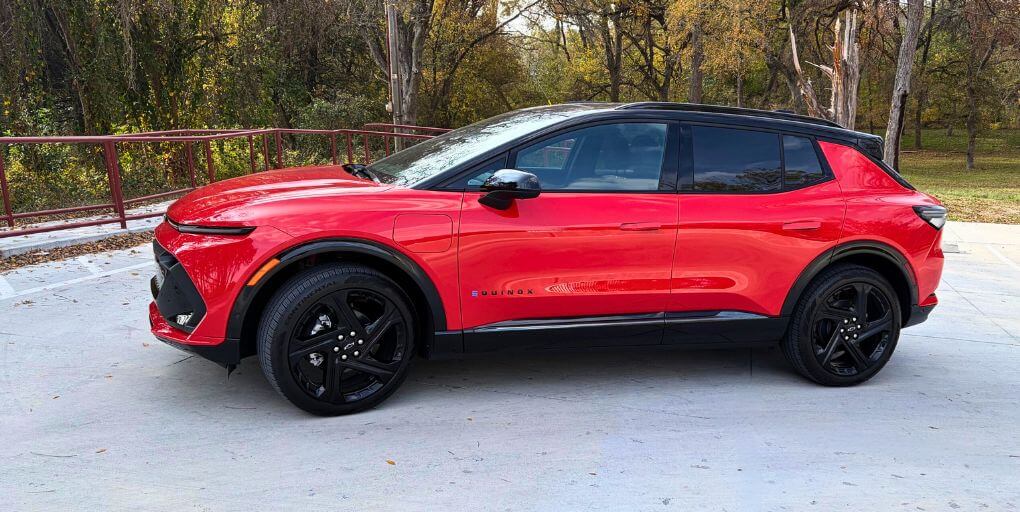
The 2026 Chevrolet Equinox EV has become one of America's best-selling electric vehicles, trailing mainly Tesla, and it's easy to see why. It starts at $34,995 before destination, gets 319 miles of EPA-rated range, rides smoothly, offers GM's excellent Super Cruise hands-free driving system, and looks like a normal compact SUV, not a science project. With the $7,500 federal EV tax credit gone since September 30, 2025, that low starting price does more work than ever.
It also doesn't have Apple CarPlay or Android Auto. GM dropped both in favor of a Google-based infotainment system. Depending on how much you rely on your phone in the car, that's either a small annoyance or a dealbreaker, and any honest review has to say so up front, because it decides who should and shouldn't buy this car.
That aside, the Equinox EV is about as close as the mainstream market has come to a normal car that happens to be electric. You don't have to rearrange your life around it or be an EV enthusiast. It's a comfortable, well-equipped compact SUV that charges in your garage overnight and costs less than most rival EVs with similar range.
| Specification | 2026 Equinox EV 1LT FWD |
|---|---|
| Starting price | $34,995 (plus destination) |
| Charge port | CCS1 (GM-approved NACS adapter for Superchargers) |
| Battery | 85 kWh (usable) |
| EPA range (FWD) | 319 miles |
| EPA range (AWD) | 307 miles (LT2), 288 miles (RS) |
| Power (FWD) | 220 hp / 243 lb-ft |
| Power (AWD) | 300 hp / 355 lb-ft |
| 0 to 60 mph (FWD) | 7.8 seconds |
| 0 to 60 mph (AWD) | 6.0 seconds |
| DC fast charging max | 150 kW |
| Home charging (Level 2) | 11.5 kW / ~33 miles per hour |
| Full charge time (Level 2) | ~9.5 hours |
| Cargo space | 26.4 cubic feet |
| Battery warranty | 8 years / 100,000 miles |
Range: What 319 Miles Means in Practice
The front-wheel-drive Equinox EV 1LT gets a 319-mile EPA rating from its 85-kWh battery. That number stands out because it comes from the base model, not a pricier long-range trim. Every Equinox EV uses the same battery. Choose AWD and the rating drops to 307 miles on the LT or 288 miles on the RS with its bigger 21-inch wheels, both still well above average for the class.
In mild weather, owners and testers report real-world range close to the EPA figure, even at 70-plus mph on the highway with the A/C on. Plenty of EVs fall further short than that. Winter is the catch. Expect range to drop by roughly 20 to 35% below freezing, which is normal for EVs, and some owners in cold states say the displayed range estimate can be optimistic on very cold days. That's not unique to the Equinox EV, but it's worth knowing if you live somewhere with harsh winters.
Home charging is a strong point. The 11.5-kW onboard charger is among the fastest in this price range and adds roughly 33 miles of range per hour on a 48-amp charger. Charging from nearly empty to full takes about 9.5 hours on 240 volts, so most owners will simply wake up to a full battery. At a DC fast charger, the 150-kW peak adds about 70 miles in 10 minutes and takes the battery from 20% to 80% in around 30 minutes. That 150-kW limit isn't class-leading, since some rivals accept 250 kW or more, but it's fine for most road trip stops.
The 2026 Equinox EV has a CCS1 charge port. With GM's approved NACS adapter, it can use many Tesla Superchargers, which greatly expands your fast charging options. Many owners say Superchargers are more often available and working than some other networks. GM has announced a native NACS port for the 2027 model year, so you won't need the adapter if you wait.
How It Drives
The Equinox EV isn't trying to be a sports car, and Chevy doesn't pretend otherwise. The front-wheel-drive version reaches 60 mph in 7.8 seconds. That's a little slower than many electric SUVs but plenty for everyday driving. Because electric motors deliver torque instantly, it feels quicker below 40 mph than its 0-to-60 time suggests, and that's where most city and suburban driving happens.
Ride comfort is what reviewers praise most. The suspension soaks up bumps well and makes for relaxed highway cruising, and the cabin stays quiet. With the heavy battery low in the floor, the car feels planted and stable without a harsh ride.
Regenerative braking has several strength settings, including a one-pedal mode where lifting off the accelerator slows the car to a full stop without touching the brake pedal. Most owners say it feels natural after a short adjustment. The steering wheel paddle for adjusting regen on the fly is handier than digging through menus, as some rivals make you do.
There's some body lean in corners, which is typical for a comfort-focused compact SUV. It isn't built for twisty back roads, and that suits the people who buy it. In emergency maneuvers and braking tests, it has held up well against its competitors.
Super Cruise: The Feature That Changes the Equation
Super Cruise is available on the Equinox EV, and it's widely considered the most capable hands-free driver assistance system from a mainstream brand. Before deciding if it's worth paying for, it helps to know what it does and what it doesn't.
Super Cruise lets you drive hands-free on hundreds of thousands of miles of mapped, compatible highways in the US and Canada. On those roads, you can take your hands off the wheel while the system steers, accelerates, and brakes. A driver-facing infrared camera makes sure you're watching the road. Look away too long and it warns you, with escalating alerts, before handing control back.
It can also change lanes for you, either when you tap the turn signal or on its own to pass slower traffic, and it works both at highway speeds and in stop-and-go traffic. Reviewers who've used it on long, congested highway commutes consistently say they arrive less tired. It isn't perfect. It can disengage in heavy rain or where the map data doesn't match the road. But on the major highways where most long-distance driving happens, the experience is consistently good.
Super Cruise costs extra up front on many trims and needs a paid subscription after the included trial, so check the current pricing when you shop. If you have a long highway commute or take regular road trips, it's one of the best reasons to choose the Equinox EV over a similarly priced rival. If you mostly drive around town and rarely use cruise control, it adds much less and is harder to justify.
The Infotainment Problem
GM decided to drop Apple CarPlay and Android Auto from its EVs and use a Google-built infotainment system instead. The argument is that built-in Google Maps, Google Assistant, and apps give you a smoother connected-car experience than mirroring your phone. In practice, it's more mixed than that.
The Google system does some things very well. Google Maps is built right in and accurate, and it plans charging stops. Google Assistant voice commands work reliably for navigation and basic controls. The system gets over-the-air updates. On the 17.7-inch screen in the RS or the smaller screen on lower trims, the interface looks clean and responds quickly.
The downside is that you need to sign into a Google account in the car to get the most out of it, which some people find intrusive or annoying. The bigger problem is for iPhone users. If you use Apple Music, iMessage, or other Apple services through CarPlay, there's nothing in the car that fully replaces them. The Google system works nicely with Android phones and Google accounts, but it doesn't make up for what iPhone owners lose.
Critics have hammered GM for this decision, and many owners list it as their biggest frustration. The owners who don't mind are usually Android users already comfortable with Google, or drivers who mostly listen to the radio and don't use their phone much in the car.
This really does come down to you. If you use CarPlay or Android Auto every day and would miss it, the Equinox EV is the wrong car, however good the rest of it is. If you're happy with Google's apps, or you rarely mirror your phone, it probably won't bother you much day to day.
Trim Levels and What Each Adds
1LT FWD (~$34,995)
This is where the value is. The base 1LT has the full 85-kWh battery and 319-mile range, a full set of standard safety features, heated front seats, a wireless phone charger, and the 11-inch Google-based touchscreen. If you mainly want the range and low price, this trim gives you both without paying for extras you don't need.
1LT AWD and 2LT AWD (~$38,500 to $45,300)
Adding all-wheel drive brings a second motor, raising output to 300 horsepower while trimming range slightly. The 2LT adds more comfort and tech features on top. AWD makes sense if you live somewhere with regular snow or want extra traction on steep or slippery roads. Expect to pay roughly $3,500 more for AWD on the 1LT and around $10,000 more for the 2LT AWD compared with the base 1LT FWD.
RS AWD (~$47,600)
The RS is the sporty-looking, loaded-up trim. It adds the 17.7-inch center screen, blacked-out exterior trim, RS badges, and red interior accents on some color combinations. AWD is standard, and its 21-inch wheels bring range down to 288 miles. The RS is for buyers who want all the tech and a more distinctive look. The 1LT makes more sense if you want to spend as little as possible.
The Value Case: Running the Real Numbers
At $34,995, the Equinox EV 1LT costs less than many popular hybrid SUVs, including well-equipped versions of the Honda CR-V Hybrid and Toyota RAV4 Hybrid, which often run in the high $30,000s. That's a notable change. For years, EVs relied on the federal tax credit to compete on price with hybrids. The credit ended for vehicles bought after September 30, 2025, and the Equinox EV still undercuts many hybrid rivals at its sticker price.
The running costs make the picture clearer. At 15,000 miles a year, the Equinox EV at 3.5 miles per kWh and $0.16 per kWh uses about $686 in electricity. A comparable hybrid SUV at 40 mpg and $3.50 a gallon uses about $1,313 in fuel. That saves you about $627 a year, or $3,135 over five years, before you count lower maintenance from skipping oil changes and wearing out brakes more slowly.
Insurance usually costs more for EVs than for comparable hybrids. Depending on your age, driving record, and location, expect the Equinox EV to cost roughly $400 to $800 more a year to insure, which adds $2,000 to $4,000 over five years and eats into the fuel savings.
Add it all up and the Equinox EV typically comes out about even with a comparable hybrid over five years, or a few thousand dollars ahead, depending on your electricity rate, gas prices, how much you drive, and what you pay for insurance. The more you drive and the cheaper your electricity, the better the EV looks.
Reliability and Early Owner Experience
The Equinox EV rides on the same GM platform (originally branded Ultium) as the Chevrolet Blazer EV, Cadillac Lyriq, and other GM EVs. The Blazer EV had serious software and quality problems at launch. The Equinox EV's launch went much more smoothly, and early owner feedback has been far more positive.
Owner satisfaction has been strong, and major reviewers have generally recommended the Equinox EV. Reliability data is still building, since the car hasn't been on sale for long, and some owners have needed dealer visits for software updates and minor build-quality issues. Early owner reviews on sites like Kelley Blue Book have been very positive, though they tend to come from enthusiastic early adopters.
Like most new models, the Equinox EV has had a few recalls, mostly handled through software updates or dealer inspections at no cost. Before buying, new or used, run the VIN through NHTSA's recall lookup at nhtsa.gov to make sure any open recalls have been done.
The 8-year, 100,000-mile battery and electric drive warranty is your best protection against reliability surprises. GM's coverage matches the best in the segment and covers the battery defects and capacity loss that worry most first-time EV buyers.
Charging Network Reality in 2026
The 2026 Equinox EV has a CCS1 port for fast charging and a J1772 port for Level 2. You can use CCS networks like Electrify America and EVgo directly, and with GM's approved NACS adapter, you can also use many Tesla Superchargers and IONNA stations. That's a big practical upgrade over just a few years ago. Tesla's Supercharger network has tens of thousands of stalls across North America, very good uptime, and usually more stalls per site than other networks. Keep the adapter in the car, and check GM's approved list for which adapter to use.
For everyday charging, the 11.5-kW home charging rate is fast enough that most home chargers will fill the car overnight, even from low. A common 32-amp charger adds about 25 miles per hour, while a 48-amp charger lets the Equinox EV use its full 11.5-kW capacity for about 33 miles per hour.
The 150-kW DC fast charging cap is where the Equinox EV trails some rivals. Cars with 800-volt systems, like Hyundai's IONIQ models, can charge much faster at compatible stations, and Teslas can take up to 250 kW at Superchargers. On a long road trip with several charging stops, those extra minutes per stop add up. For most owners, who commute and take the occasional longer trip, it rarely makes a difference.
Safety Equipment
The Equinox EV comes with a generous list of standard safety features: automatic emergency braking with pedestrian and cyclist detection, blind spot warning, rear cross-traffic alert, lane departure warning, lane keeping assist, adaptive cruise control, and automatic high beams. GM's Safety Alert Seat, which vibrates the driver's seat instead of beeping for some warnings, is also included. It's a nice touch if you find warning chimes annoying or hard to hear.
Super Cruise, covered above, goes much further than typical driver assistance with real hands-free driving on mapped highways. Offering it as an option instead of standard equipment makes sense given what it costs. Making it standard would raise the price for drivers who mostly stay in town, where it doesn't help much.
Long-Term Ownership Considerations
The Equinox EV's financial case is strongest if you drive a lot, charge at home at reasonable electricity rates, and keep the car for several years while it's under warranty. Looking at the full five-year and ten-year picture shows clear advantages, along with a few areas where it pays to be realistic.
Over five years, the fuel savings of about $627 a year compared with a similar hybrid SUV add up to around $3,135. Insurance claws back $2,000 to $4,000 of that. What tips the math in the EV's favor is its lower purchase price than many comparable hybrids, plus lower maintenance costs.
Speaking of maintenance, EV savings are real but sometimes exaggerated. There are no oil changes, spark plugs, or transmission fluid services, and regenerative braking greatly reduces brake wear. On the other hand, EVs wear through tires a bit faster than gas cars, because the battery adds weight and electric motors deliver torque instantly. Plan on replacing tires roughly 15 to 20% sooner than you would on a comparable gas vehicle.
Resale value is the biggest open question. Used EV prices have swung more than gas car prices over the past few years, driven by a wave of new models, falling new EV prices, and the end of the federal tax credits. The Equinox EV's low starting price gives it some protection, since there's less room for its value to fall. Still, predicting its value in three to five years, for a model with such a short track record, is guesswork.
Battery protection is much more predictable. GM's 8-year, 100,000-mile warranty covers battery defects and capacity loss below set thresholds, so buyers are protected against the main long-term risk that's specific to EVs for as long as they're within that window. If you plan to sell or trade within eight years, the warranty also reassures the next buyer.
How It Compares to Key Rivals
The Equinox EV's closest rivals at similar prices are the Tesla Model Y and the Ford Mustang Mach-E, and each makes different trade-offs.
Tesla's Model Y Standard starts at around $40,000 and offers a similar range, faster Supercharging with native access to the network, quicker acceleration, and Tesla's excellent route planning and software. It costs about $5,000 more than the Equinox EV 1LT and, like the Chevy, lacks CarPlay and Android Auto. The Model Y is the better pick if you road trip often and want the smoothest charging experience. The Equinox EV makes more sense if price matters most and you value a softer ride and hands-free Super Cruise.
The Ford Mustang Mach-E costs somewhat more in its entry versions and offers less range than the Equinox EV's 319 miles, but it includes Apple CarPlay and Android Auto, sharper handling, and Ford's large dealer network. That addresses the Equinox EV's biggest weakness directly. If CarPlay is a must, you mostly drive in town, and the Mach-E's range covers your needs, it's worth a serious look despite the higher price.
Verdict: Who Should Buy It
The 2026 Chevrolet Equinox EV is the right choice if you want a mainstream electric SUV with excellent range at a price that undercuts most comparable EVs, even without a federal tax credit. Its 319-mile range takes range anxiety off the table for normal use, Super Cruise is the best hands-free highway system at this price, and the whole experience is normal enough that people switching from gas cars only have to get used to plugging in at home.
The case against it comes down to one thing: no Apple CarPlay or Android Auto. If you're an iPhone user who relies on CarPlay every day, this car will frustrate you from the start, and no amount of range, value, or Super Cruise will fix that.
For Android users, people comfortable with Google's apps, and anyone who wants the most range for the lowest price in an electric SUV, the Equinox EV is one of the best values in the segment.
Strengths
- 319 miles EPA range from base trim, same battery across all trims
- $34,995 starting price undercuts many hybrid SUVs
- Super Cruise available, best mainstream hands-free highway driving
- Supercharger access with GM's approved NACS adapter
- 11.5-kW home charging, full charge overnight
- Comfortable ride and quiet cabin
- 8-year/100,000-mile battery warranty
Weaknesses
- No Apple CarPlay or Android Auto
- 150-kW DC fast charging ceiling trails class leaders
- 26.4 cubic feet of cargo space is below most compact SUV competitors
- No federal tax credit for 2026 buyers
- Long-term reliability data still limited
- Super Cruise costs extra and needs a subscription after the trial
Android users and people comfortable with Google's apps who want a mainstream electric SUV with lots of range for the money. Highway commuters who'd use Super Cruise. Drivers who can charge at home and want the lowest running costs. And anyone switching from gas who wants an EV that feels familiar, with plenty of range, at a sensible price.