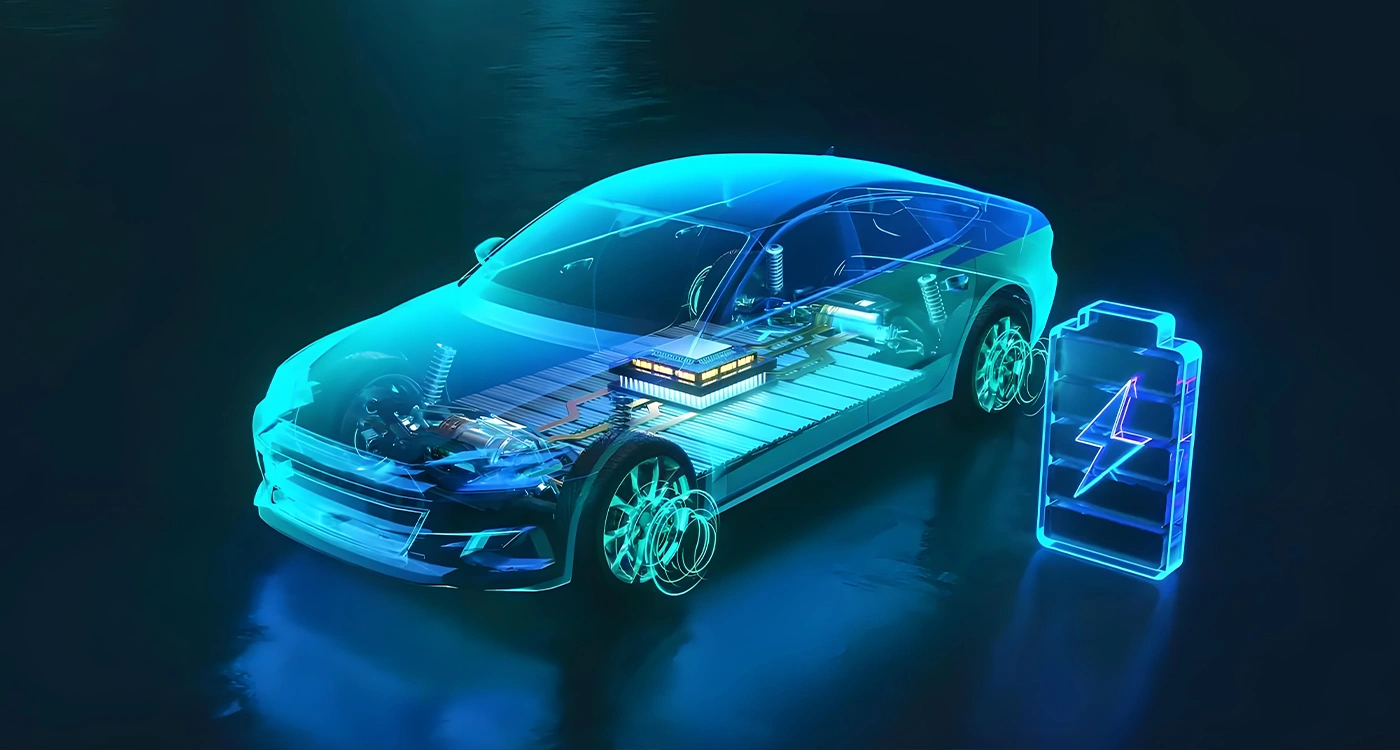
Every EV battery loses capacity as it ages. That part isn't up for debate; it's basic chemistry. What a buyer needs to know is how fast it happens, and the data gathered from hundreds of thousands of EVs over the past ten years is far more encouraging than the scary headlines. With the car's software managing it properly, a modern EV battery typically keeps 85 to 90% of its original capacity after 100,000 miles. Ten years ago that would have sounded hopeful. Today it's a fairly cautious average.
Below we look at what causes degradation, what fleet data from the major brands shows, how it stacks up against the slow decline of a gas engine, and what you can do to slow it down.
What Battery Degradation Is
Lithium-ion batteries wear out in two ways. Calendar aging is the capacity you lose just from time passing, whether the car is driven or not. Cycle aging is what you lose from charging and discharging over and over. Each cycle causes tiny, permanent changes inside the cells: lithium plating, electrolyte breakdown, and physical strain on the electrodes all play a part. None of it is a defect. It's the same process that wears out your phone battery, only much slower, because EV packs are built with a lot more spare capacity and far better temperature and charge control than a phone or laptop.
What the Fleet Data Shows
The independent source you'll see quoted most is Recurrent, a company that collects battery health data from tens of thousands of EVs on US roads. Its numbers, which it updates on a rolling basis, keep showing the median EV holding about 90% of its original range at 100,000 miles. Most of the loss happens in the first 20,000 to 30,000 miles. After that the curve flattens out a lot, which is why people often describe the early drop as the battery "settling in."
Tesla's impact reports show the same pattern. Model S and Model X packs average about 12% degradation at 200,000 miles, so they still have roughly 88% of their original range at a distance most owners will never reach. Hyundai and Kia's E-GMP cars, the Ioniq 5 and EV6, have done similarly well in independent testing, usually landing between 90 and 93% at 100,000 miles.
What Speeds Up Degradation
Batteries don't all age at the same pace. The differences mostly come from four things you can influence.
Heat Exposure
Long stretches of high heat do more to speed up calendar aging than anything else. EVs that spend their lives in Arizona, Texas, or the Gulf states without active liquid cooling lose capacity noticeably faster than the same cars in milder climates. Battery warranty claims run higher in hot states for exactly this reason, and it shows up in the numbers, not just in owner stories.
Charging at 100% Regularly
Leaving a lithium-ion battery sitting at a very high charge for long periods puts more stress on the cells than keeping it in the middle of its range. Most automakers now tell owners to charge to 80 or 90% for daily use and save 100% for the morning of a long trip. Of everything an owner controls, this habit makes the biggest difference.
DC Fast Charging Frequency
Fast charging heats the cells more than Level 2 charging does, and heat is behind most forms of wear. Fast charging now and then on road trips barely registers over the long run. Owners who rely on it every day, often because they can't charge at home, do see somewhat faster wear, usually a few extra percentage points of lost capacity over 100,000 miles compared with mostly Level 2 charging.
Deep Discharge Cycles
Regularly running the battery close to empty before plugging in is harder on the cells than topping up more often from a moderate level. Commuters with a steady routine rarely need to think about this. It's more relevant if you tend to let the battery get very low before you plan your next charge.
How This Compares to a Gas Engine's Own Decline
Gas engines wear with mileage too. Compression drops, seals age, and fuel economy slowly slides. Nobody calls that range anxiety, because it happens gradually, you can't see it without test equipment, and there's no single number on the dash that spells it out. A gas car getting 10 to 15% worse mileage at 100,000 miles is considered normal and nobody talks about it. An EV that has lost a similar share of its range gets treated like a problem, mostly because the owner sees the range figure every day, and nobody ever sees "engine efficiency" on a gas car's dashboard.
What the Warranties Guarantee
| Manufacturer | Battery Warranty | Capacity Guarantee |
|---|---|---|
| Tesla | 8 years / 100,000-150,000 mi (model dependent) | 70% minimum |
| Hyundai/Kia | 10 years / 100,000 mi | 70% minimum |
| Chevrolet | 8 years / 100,000 mi | 60-70% minimum |
| Ford | 8 years / 100,000 mi | 70% minimum |
Think of these figures as the minimum the automaker is legally on the hook for, not what you should expect. The fleet data above shows most cars staying well above those floors, even after the warranty runs out. Getting a pack replaced under warranty purely for lost capacity, as opposed to a manufacturing defect, is still rare with today's EVs.
What This Means for Resale and Buying Used
If you're shopping for a used EV, ask for a battery health report or state-of-health percentage. Don't treat the odometer as a stand-in for battery condition. A 60,000-mile car that lived in a mild climate and charged mostly on Level 2 may well test better than a 40,000-mile car that fast-charged daily in Phoenix. More sources offer this data now. Tesla shows it in the app, and services like Recurrent and Aviloo sell independent battery checks, usually for $30 to $50. That's money well spent when the battery's condition can swing the car's value by thousands.
The Variable Worth Worrying About
Two owners can drive the same miles and charge the same way and still end up with different battery health after five years. The reason usually isn't anything they did. It's the climate the car lived in. When you shop used, give that as much weight as the service records. A car from Phoenix and a car from Seattle can show very different battery reports at the same mileage.