Most car batteries give plenty of warning before they die. The trouble is that the signs are easy to shrug off: the engine takes a beat longer to turn over, the dome light looks a little weak, the radio resets itself for no clear reason. A battery on its way out usually shows these symptoms for weeks, sometimes months. Catch them early and you get a planned $150 replacement. Miss them and you get a tow truck.
Below we cover the six signs worth watching for, how long a battery should last, what a shop test tells you, and what replacement costs in 2026 by battery type.
How Car Batteries Fail
A lead-acid battery wears out through sulfation. Every time it charges and discharges, lead sulfate crystals form on the plates, and over time they cut into how much charge the battery can store and deliver. Age speeds this up. So does heat, running accessories with the engine off, and lots of short trips that never give the alternator time to top the battery back up after a start.
That's why a battery can start the car every morning for months while its reserve capacity keeps shrinking. Then one cold night, or one headlight left on, pushes it below what the starter needs.
Sign 1: Slow or Labored Engine Cranking
This is usually the first thing drivers notice, and it's the most reliable. A healthy battery spins the starter quickly and the engine fires within about a second. A weak one drags. You'll hear a slower, heavier "rur-rur-rur" before the engine catches, and it gets worse in cold weather because battery chemistry slows down when it's cold no matter how old the battery is. If starts have been getting slower over the past few weeks, the battery has probably used up most of its life.
Sign 2: Dimming Headlights or Interior Lights at Idle
Watch the headlights or dash lights at idle. If they dim, then brighten when you rev the engine, the alternator is covering for a battery that can't hold enough charge by itself. The same symptom can also point to a tired alternator, so don't buy a battery based on this alone. A load test (see below) will tell you which part is at fault.
Sign 3: The Battery Warning Light
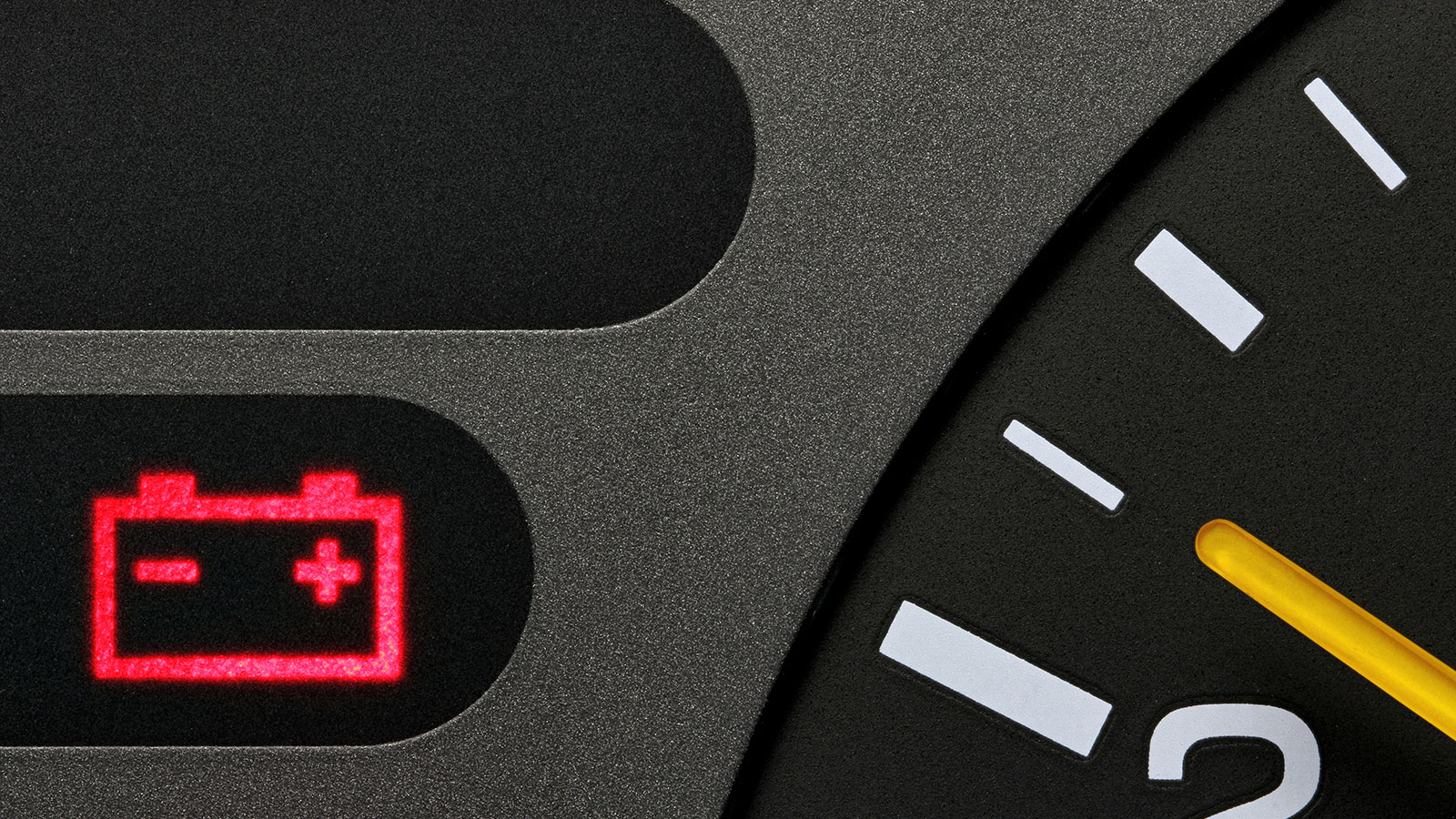
Modern cars keep an eye on system voltage all the time. When the battery-shaped light comes on, the car has seen voltage outside its normal range. That can mean a failing battery, a failing alternator, or a loose or corroded cable. All three look the same from the driver's seat, and sorting them out takes a multimeter or a shop scan tool.
Sign 4: A Swollen or Misshapen Battery Case
Too much heat or overcharging can make the case bulge. That's internal damage, and a jump-start won't fix it. It's also a safety problem, since a swollen battery can leak sulfuric acid and, in rare cases, split open. If you see swelling, cracks, or leaks, skip the diagnosis and replace the battery.
Sign 5: Corrosion on the Terminals
White, ashy, or blue-green crust on the terminals comes from hydrogen gas venting from the battery and reacting with the metal. Light buildup usually cleans off with a wire brush and a paste of baking soda and water, and the connection is good again. Heavy corrosion that has eaten into the posts is a different story. It often means the battery has been venting a lot, commonly from overcharging, and it's worth getting the battery tested even if the car still starts fine.
Sign 6: The Battery Is Simply Old
Age tells you more than any one symptom. A conventional flooded battery typically lasts 3 to 5 years. AGM (absorbent glass mat) batteries, which you'll find in most cars with stop-start, tend to last 4 to 6. The build date is stamped on the case, usually as a letter and a number: the letter is the month and the number is the year. Once a battery gets close to four years old, have it load tested even if nothing seems wrong, because batteries that age can quit with almost no warning.
How a Professional Battery Test Works
AutoZone, O'Reilly, Advance Auto Parts and most other parts chains will load test your battery for free. The tester puts a controlled load on the battery for a few seconds and watches the voltage. For a 12-volt battery at room temperature, dropping below about 9.6 volts under load generally means it's failing, even if the car still starts.
It's also worth asking about a parasitic draw test. This checks whether something is pulling power while the car is parked: a sticky relay, a glovebox or dome light that doesn't switch off, or an aftermarket gadget wired in wrong. If you replace the battery without finding a draw like that, the new one will go flat just as fast as the old one did.
Replacement Costs by Vehicle Type
| Battery Type | Typical Vehicle | Part Cost | Installed Cost |
|---|---|---|---|
| Standard flooded lead-acid | Most sedans, older SUVs | $100 – $160 | $130 – $220 |
| AGM (stop-start systems) | Most 2018+ SUVs and trucks | $180 – $280 | $220 – $350 |
| EV/hybrid 12V auxiliary battery | Hybrids, EVs (not the main pack) | $120 – $220 | $160 – $280 |
About that last row. The small 12-volt battery in a hybrid or EV has nothing to do with the big high-voltage pack that drives the car, and it wears out on the same schedule as the battery in any gas car. If it dies, it's a cheap, routine fix. Plenty of owners assume the worst when their hybrid won't power up, and shops spend a lot of time explaining that the main pack is fine.
Habits That Extend Battery Life
Short trips wear batteries out faster than anything else. Starting the engine takes a big gulp of charge, and a 10-minute drive to the shops doesn't put it all back. If most of your driving is short errands, take a longer drive of 30 minutes or more now and then, or hook up a battery maintainer if the car sits for more than a week or two. Heat is also harder on batteries than cold, even though winter is when most of them fail. Summer does the damage over months; the first frosty morning is just when you find out.
Replacing a Battery Yourself: What's Involved
Swapping a battery is one of the easier DIY jobs on a modern car, usually 15 to 20 minutes with a basic socket set. Take the negative cable off first, then the positive. Remove the hold-down bracket, lift the old battery out, drop the new one in, and connect positive first, then negative. One catch on newer cars: some models, many European ones especially, need the new battery registered with the car's battery management system. Skip that step and the alternator may undercharge the new battery and shorten its life. Check the owner's manual or search your exact model before you start.
The Free Test Most Drivers Skip
Slow starts, lights that dim at idle, a warning light on the dash, or a battery older than four years: any one of these is a good reason to stop by a parts store and ask for a load test. It takes about 10 minutes and most chains don't charge for it. Wait for the battery to decide for you, and it tends to happen at 6 a.m. in a cold parking lot, not on a quiet Tuesday afternoon.