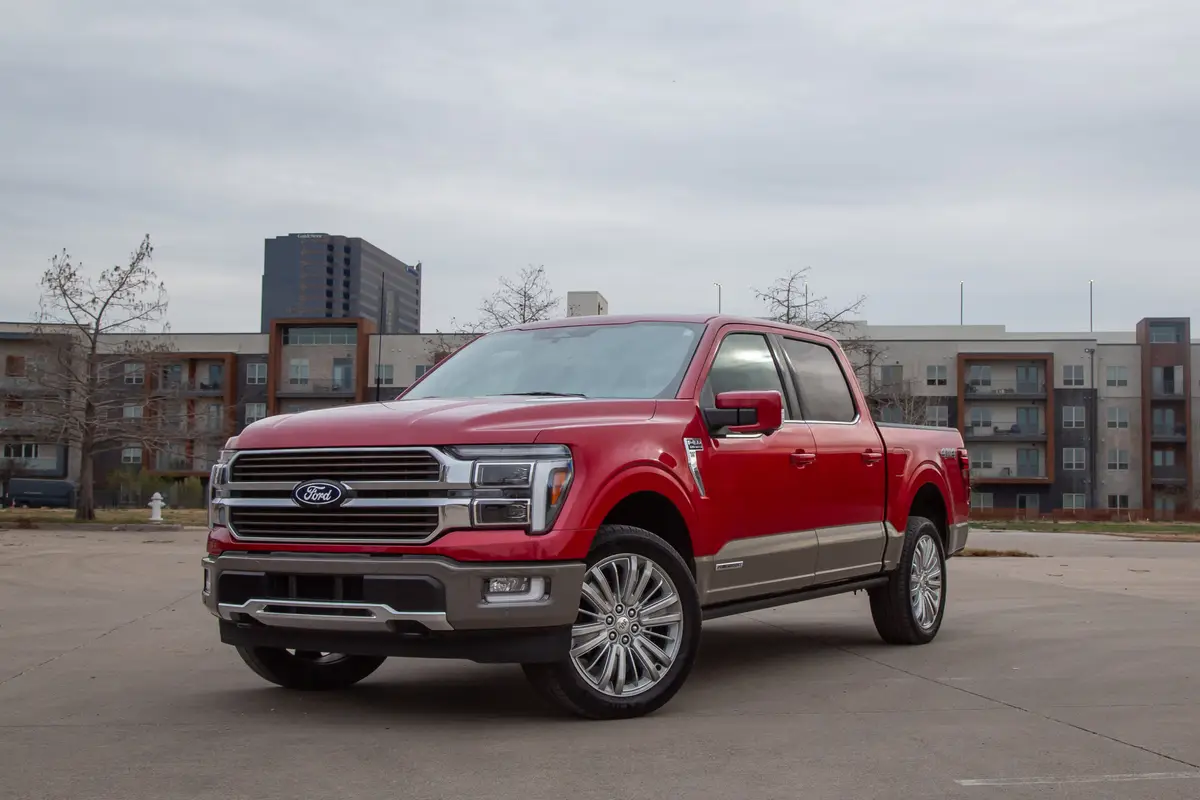
Ford's F-Series has been America's best-selling truck for nearly five decades and its best-selling vehicle overall for more than 40 years, and in 2026 the F-150 is still earning that spot. It's not just habit or marketing. The F-150 is excellent at what truck buyers care about: towing, payload, toughness on the job, comfort and tech in the upper trims, and a huge range of configurations. The same nameplate can suit a contractor, a weekend trail driver, or someone who wants a luxury daily driver.
This review looks closely at four of the most important 2026 F-150 setups: the XLT SuperCrew with the PowerBoost Hybrid, the Lariat 4x4 with the 3.5L EcoBoost, the Raptor, and the Platinum SuperCrew. It draws on owner feedback, long-term reliability reports, and real-world testing from the truck community to show where the F-150 shines, where it falls short, and which version makes sense for which buyer.
Understanding the F-150 Lineup: The Decision Tree
The F-150's huge lineup is both its biggest strength, since there's a version for almost any need, and the biggest source of confusion for buyers. Before you think about engines or trims, make three basic decisions.
Cab style. The Regular Cab has two doors and a short or long bed, and it's mainly for work use where bed length and payload count for more than interior space. The SuperCab has four doors, with small rear doors and a tighter back seat. The SuperCrew has four full-size doors and a real rear seat, and it's the pick for most personal-use buyers. The SuperCrew has become the most popular F-150 because it gives you full truck capability with the interior room of a big SUV.
Bed length. The choices are 5.5 feet (standard on SuperCrew), 6.5 feet (available on SuperCrew and standard on SuperCab), or 8 feet (Regular Cab and SuperCab only). Unless you often haul things longer than that, the 5.5-foot bed handles most personal truck jobs. For work, or if you regularly carry long loads, the 6.5 or 8-foot bed changes what you can haul.
Engine. This choice changes the truck's character and capability more than anything else. The F-150 offers several engines, from the 2.7L EcoBoost to the 5.0L V8, plus the high-output engines in the Raptor models. We'll focus on the two most buyers should look at.
The PowerBoost Hybrid: The Engine to Get for Most Buyers
The PowerBoost Hybrid pairs Ford's 3.5L EcoBoost V6 with an electric motor built into the 10-speed automatic transmission, a small lithium-ion battery, and Ford's Pro Power Onboard system, which can supply up to 7.2 kW of electricity to power tools and appliances. The result is 430 horsepower and around 570 lb-ft of torque, more torque than the regular 3.5L EcoBoost. Fuel economy is strong for a full-size truck, with EPA combined ratings in the low-to-mid 20s depending on drivetrain, and city and highway numbers that sit unusually close together.
In real-world driving, owners generally see the low-to-mid 20s depending on conditions and load, noticeably better than the high teens to low 20s typical of the regular EcoBoost under similar loads. At 15,000 miles a year and $3.50 a gallon, that can save several hundred dollars a year. For 2026, Ford made the PowerBoost available on more trims, including the STX, and depending on configuration it can pay for its price premium within a few years, after which the savings are yours to keep.
The PowerBoost can tow up to 11,600 pounds when properly equipped. That's plenty for most boats, campers, and utility trailers, but it's below the 13,500-pound maximum available with the non-hybrid 3.5L EcoBoost. If you tow regularly and want better fuel economy the rest of the time, plus Pro Power Onboard, the PowerBoost is the clear choice. If you tow very heavy trailers near the top of the F-150's range, the non-hybrid 3.5L EcoBoost is the better fit.
Pro Power Onboard is one of the most useful truck features of recent years. The PowerBoost comes with a 2.4 kW version, and a 7.2 kW version is available. It's like having a serious portable generator built into the truck. It can run power tools on a job site, power a tailgate party with a TV and cooking gear, provide backup power during an outage, or even charge an EV in a pinch. The 7.2 kW setup handles most contractor jobs and household needs, and many contractors find they no longer need to haul around a separate generator.
3.5L EcoBoost: For Maximum Towing at Work
The non-hybrid 3.5L EcoBoost makes 400 horsepower and 500 lb-ft of torque, a little less than the PowerBoost but still among the strongest options in the lineup outside the Raptor models. Properly equipped, it tows up to 13,500 pounds, the F-150's maximum and nearly 2,000 pounds more than the PowerBoost. It uses more fuel, especially in town, where the hybrid's electric assist makes the biggest difference.
If you mainly use your truck for work, regularly tow heavy trailers, don't care much about fuel economy, and won't use Pro Power Onboard, the 3.5L EcoBoost is a great choice. For most personal-use buyers who tow moderate loads, the PowerBoost's mix of power, efficiency, and onboard generator makes it the better all-around package.
Towing and Payload: The Numbers That Matter
The 2026 F-150's best numbers are up to 13,500 pounds of towing and up to 2,440 pounds of payload, meaning the weight you can carry in the cab and bed combined. The PowerBoost Hybrid tops out lower, at about 11,600 pounds of towing and around 1,740 pounds of payload. These headline numbers keep the F-150 at the top of its class, but they only apply to specific setups. Your truck's actual towing and payload ratings depend on its cab, bed, engine, axle ratio, and options, and they're printed on the sticker in the driver's door jamb.
Always check that sticker before you load up or hook up a trailer. Two F-150s that look alike can have towing ratings thousands of pounds apart, and that matters if you're planning to pull a specific boat, camper, or trailer. Buy a truck rated for what you'll actually tow, not the biggest number in the brochure.
The F-150's integrated trailer brake controller, available with towing packages, and Pro Trailer Backup Assist, which lets you steer a trailer in reverse by turning a knob instead of the steering wheel, are very helpful for occasional towers. Plenty of people who could never back up a trailer have done it on their first try with Pro Trailer Backup Assist. If you're new to towing, make sure the truck you're considering has it.
Technology: Pro Power Onboard and the F-150's Digital Features
Beyond Pro Power Onboard, the 2026 F-150 comes with Ford's SYNC 4 infotainment system on a 12-inch touchscreen, with a larger screen on some upper trims. Wireless Apple CarPlay and Android Auto come standard, the truck gets over-the-air software updates, and Ford's BlueCruise hands-free highway driving system is available. BlueCruise works on pre-mapped highways and lets you take your hands off the wheel within those areas, making it one of the best hands-free systems outside of Tesla and GM's Super Cruise. It requires a subscription after any included trial.
The bigger screen on upper trims neatly splits space between navigation, media, and truck controls. Ford's digital instrument cluster is clear and configurable, and the system is generally quick and easy to use, though some drivers find the number of menus a lot to take in at first.
Ford's connected navigation, with live traffic and predictive routing, plus fleet management tools for business buyers through Ford Pro, show how much Ford has invested in the F-150's connected features. For small businesses running several F-150s, those fleet tools can save real time and money beyond the convenience for individual drivers.
Which Trim Makes Sense
The F-150 lineup starts with the XL at around $39,300 before a hefty destination charge of about $2,600, then climbs through the STX, XLT, Lariat, King Ranch, and Platinum, up to off-road and performance models like the Tremor and Raptor, which run well into six figures in Raptor R form. Here's where the value is, and where you start paying more for less.
XLT SuperCrew: The Sweet Spot
For most buyers, an XLT SuperCrew with the PowerBoost Hybrid and a mid-level equipment package is the sweet spot. You get the F-150's most important capabilities, plus useful upgrades like a bigger screen, wireless charging, better audio, and towing tech, without paying Lariat prices for extras that mostly matter in the showroom. Heated front seats and a heated steering wheel are available on the XLT through packages, and owners consistently say those are features they actually use, unlike some that just sound good in the brochure. Expect a well-equipped XLT PowerBoost SuperCrew to land somewhere in the high $50,000s to low $60,000s before incentives, depending on options. If you want a capable everyday truck that can work hard without the luxury price tag, this is the one we'd recommend.
Lariat: The Refinement Step
The Lariat adds leather seats, nicer materials throughout, available power seats with memory, more driver assistance tech, and an overall refinement that makes the F-150 feel more like a luxury vehicle than a work tool. Well-equipped Lariats typically run from the mid $60,000s into the $70,000s. If the truck is your daily driver and you spend a lot of time in it, the Lariat's nicer cabin is a real upgrade and worth the extra money. If your truck is mainly a work tool, the XLT is enough.
Ownership Costs and F-150 Reliability
The PowerBoost Hybrid has a shorter reliability track record than the regular EcoBoost. It launched for 2021, so there are now several years of owner data. The hybrid components themselves have generally held up well, but the extra electronics and software have drawn more complaints than the simpler non-hybrid EcoBoost over the same period. Ford has fixed many early software issues through over-the-air updates, and newer trucks benefit from those fixes. The non-hybrid 3.5L EcoBoost has a solid record over its long production run, especially later versions. Check for open recalls on any F-150 you're considering, as Ford has issued a number of recalls across its lineup in recent years.
Insurance for an F-150 typically runs $1,600 to $2,400 a year for a typical driver. That's more than most sedans but less than many luxury SUVs, thanks in part to the F-150's huge owner base and the wide availability of parts and repair shops. Counting depreciation, fuel, insurance, and maintenance, a well-equipped XLT PowerBoost SuperCrew can easily cost $10,000 to $12,000 a year to own, in line with large SUVs at similar prices.
The Verdict
For most buyers, the 2026 Ford F-150 with the PowerBoost Hybrid in XLT SuperCrew form is the best full-size truck you can buy. Its mix of strong towing, 570 lb-ft of torque, low-20s fuel economy, and up to 7.2 kW of onboard power is something the Ram 1500 and Chevy Silverado can't fully match in a single package. For performance fans, the Raptor's engineering is spectacular. For luxury buyers, the Platinum delivers. But the truck that makes the most people happiest most of the time is the XLT PowerBoost, where real work capability, everyday comfort, fuel efficiency, and useful tech come together at a price that's worth paying over a base model, without tipping into luxury territory where each extra dollar buys less.
The configuration that delivers the most value
XLT SuperCrew 4x4 with the PowerBoost Hybrid, a mid-level equipment package, and the towing package. You get solid towing capability (up to about 11,600 lb when properly equipped), better fuel economy, Pro Power Onboard at 2.4 kW or the optional 7.2 kW, wireless CarPlay, heated seats through the package, and Pro Trailer Backup Assist. It's the F-150 that does everything you'll really ask of it without paying for features you won't use. If you need to tow more than about 11,000 pounds regularly, switch to the non-hybrid 3.5L EcoBoost with the Max Trailer Tow Package.
How the F-150 Compares to Ram 1500 and Silverado
The full-size truck market is a real three-way fight, and calling the F-150 the winner without noting where its rivals do better wouldn't be fair. The Ram 1500 has long had the most comfortable, upscale cabin of the three, especially in its upper trims, and its available air suspension gives a noticeably smoother ride on rough roads, a real advantage on long drives. Ram's engine lineup has changed several times in recent years, so compare current towing ratings carefully.
The Chevrolet Silverado 1500 offers a strong 3.0L Duramax diesel with excellent fuel economy for a full-size truck, and its best configurations tow over 13,000 pounds. Chevy's Multi-Flex tailgate, which folds into several useful positions including a step and a work surface, is one of the cleverest tailgate designs in the class. The Silverado ZR2 is a real rival to the F-150 Raptor for buyers who want serious off-road ability for less money and without the Raptor's extreme performance focus.
If you're deciding between them, choose the F-150 if Pro Power Onboard matters to you (neither rival offers as much exportable power), if you want BlueCruise hands-free highway driving, or if a nearby Ford dealer makes service easier. Look at the Ram 1500 if cabin quality and ride comfort come first, or if you want air suspension. Look at the Silverado if you want the diesel's fuel economy, the Multi-Flex tailgate, or a strong off-road option in the ZR2.
The F-150 Lightning: Why It's Not on This List
The F-150 Lightning, Ford's all-electric version, shared the F-150's body but used a completely different powertrain. Many F-150 shoppers considered it, but Ford ended Lightning production in December 2025 and says it will be replaced by an extended-range electric version, driven by electric motors with a gas generator on board, promising well over 600 miles of total range. You may still find new or used Lightnings for sale, sometimes at big discounts.
The Lightning had real strengths: up to 775 lb-ft of torque, up to 320 miles of EPA range with the extended-range battery, the ability to power your home during an outage, and up to 9.6 kW of onboard power for tools. It also had clear limits for heavy work. It tows up to 10,000 pounds, less than gas F-150s, and towing can cut its range by half or more. Charging a large battery of around 98 to 131 kWh on a road trip, especially with a trailer, takes planning and good access to fast chargers. If you tow near maximum capacity often, a gas or hybrid F-150 is the better choice. If you mainly drive locally, tow lighter loads occasionally, and can charge at home, a discounted Lightning can still be a great buy. Just check warranty coverage and service support before you commit.
F-150 Buying Strategy in 2026
There's more room to negotiate on an F-150 in 2026 than there was in 2021 to 2023, when demand outstripped supply and many buyers paid over sticker. Inventory is closer to normal, and dealers want to move trucks, especially outgoing model-year stock when new models arrive. The email negotiation approach we cover elsewhere on this site works well for F-150s: asking several dealers within a reasonable distance for written quotes often saves you thousands compared with walking into a single dealership.
Ford often offers manufacturer incentives on the F-150, especially near the end of quarters and the end of the year, including cash back on certain configurations, low-rate financing, and employee pricing events. Check the current offers on Ford's website before you start negotiating, so you know what factory incentives can be stacked on top of a dealer discount. Popular configurations like the PowerBoost may get smaller incentives than slower-selling ones, but checking takes two minutes.
The Bottom Line
Looking at everything, the 2026 F-150 with the PowerBoost Hybrid in XLT SuperCrew form is the most capable and useful full-size truck for the widest range of buyers. Its towing, onboard power, fuel economy, and tech add up to a package rivals haven't fully matched in a single truck. If you have a specific need that the Ram 1500's ride and air suspension or the Silverado's diesel serve better, buy one of those. If you tow near the top of the F-150's range, choose the non-hybrid 3.5L EcoBoost. For everyone else, the F-150 PowerBoost earns its best-seller status through real capability, and the XLT trim delivers it where work capability and everyday comfort meet, without crossing into luxury pricing.